Bill · H.R. 8383· House(119-HR-8383)
Protecting Americans’ Savings Act
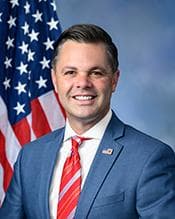
- Introduced
- 4/20/2026
- Last activity
- 4/20/2026 — Referred to the House Committee on Financial Services.
- Sponsored by
- Zachary Nunn
- Cosponsors
- None
- Introduced
- In Committee
What this bill would do
This bill, known as the "Protecting Americans' Savings Act," seeks to amend the Securities Exchange Act of 1934. It aims to establish new requirements regarding proxy voting. Specifically, it directs the Commission to prohibit "robovoting," which involves automatic voting based on proxy advisory firm recommendations without independent review. The bill also restricts institutional investors from outsourcing voting decisions to unauthorized parties. Finally, it establishes that no person is required to cast proxy votes unless they have a specific fiduciary or regulatory obligation.
Yes· 3 of 5
Does this give people more protection from unfair business practices?+4
The bill enhances protection for investors by prohibiting automatic 'robovoting' that lacks independent analysis.
Does this make what the government does easier for the public to see?+3
The bill mandates stricter standards for how proxy voting decisions are made and overseen.
Would business owners be better off under this?+2
The bill provides clearer standards for institutional investors regarding their voting responsibilities.
The opposite
No question was scored the opposite.
Who it would affect, and how
Potential Positive Impacts for People
-
Prohibition of Robovoting: By requiring the Commission to prohibit the practice of automatically voting based on advisory firm recommendations without independent review, this could ensure more thoughtful decision-making (Section 2, subsection l).
-
Control Over Voting Decisions: The bill prevents institutional investors from outsourcing their voting decisions to anyone other than a registered investment adviser or broker-dealer with a fiduciary or best interest duty (Section 2, subsection m).
-
Freedom from Mandatory Voting: This provision ensures that a person cannot be required to cast votes related to proxy or consent solicitation materials unless they are specifically obligated by fiduciary duty or certain regulations (Section 2, subsection n).
Potential Negative Impacts for People
- No negative impacts are explicitly stated in the text provided.
Groups and Interests Ranking
Every group the model scored this bill for, from -10 to +10. Hover a score for the reason it gave.
- Demographic And Interest Groups
- Good For Business Owners+2Good For High Net Worth Individuals+2
- Economy And Finance
- Improves Consumer Protection+4
- Governance And Ideology
- Improves Government Transparency+3
- Education And Technology
- Improves Data Privacy+2
- 4/20/2026
- Referred to the House Committee on Financial Services.
- Introduced in House
One bill Congress.gov lists as related to this one — companions in the other chamber, earlier versions, and bills this one absorbed or was folded into.