Bill · H.R. 8367· House(119-HR-8367)
Answering the Call Act of 2026
- Introduced
- 4/20/2026
- Last activity
- 5/13/2026 — Sponsor introductory remarks on measure. (CR H3446)
- Sponsored by
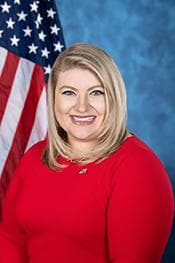
- Kat Cammack
- Cosponsors
- - 2 - 0
- Introduced
What this bill would do
The Answering the Call Act of 2026 aims to amend the Public Health Service Act to improve outreach to first responders regarding the 9-8-8 national suicide hotline. The Secretary will work to address barriers such as stigma, privacy concerns, and a lack of tailored services. This includes promoting the hotline through first responder organizations and integrating information into training and wellness policies. The bill also directs the development of specialized training for hotline staff to better serve these specific populations. Additionally, a pilot program will be established to facilitate collaboration between various federal agencies and first responder organizations.
Yes· 3 of 5
Does this make mental health care easier to get?+7
The bill enhances mental health support by promoting the 9-8-8 suicide hotline specifically to first responders.
Would union members be better off under this?+5
The bill integrates mental health resources directly into labor organizations and wellness policies.
Does this do more about addiction and overdose deaths?+3
The bill's focus on trauma-informed behavioral health practices may assist in addressing addiction-related mental health needs among first responders.
The opposite
No question was scored the opposite.
Who it would affect, and how
Potential Positive Impacts for People
-
Increased awareness and access to mental health resources: The Secretary will carry out programs to promote the 9-8-8 national suicide hotline as a key resource for first responders (Section 2(a)(2)(A)).
-
Improved integration of mental health information: Through grants and contracts, information about the 9-8-8 hotline will be integrated into training programs, wellness policies, and resources maintained by labor organizations (Section 2(a)(2)(B)).
-
Specialized support for first responders: The bill requires the development of training programs for 9-8-8 staff that use best practices specific to first responders, focusing on trauma-informed and behavioral-health-focused approaches (Section 2(a)(2)(D)).
-
Data-driven outreach improvements: The Secretary will collect data on how first responders use the hotline to measure its impact and improve future outreach strategies (Section 2(a)(2)(C)).
Potential Negative Impacts for People
- Privacy concerns regarding data collection: While the bill includes protections, the Secretary will be collecting data on the use of the 9-8-8 hotline by first responders (Section 2(a)(2)(C)). The bill notes that the Secretary must ensure this data is administered to protect personal privacy through aggregation and de-identification to address these concerns (Section 2(a)(3)(A)).
Groups and Interests Ranking
Every group the model scored this bill for, from -10 to +10. Hover a score for the reason it gave.
- Healthcare
- Improves Mental Health Access+7Improves Opioid Crisis Response+3
- Demographic And Interest Groups
- Good For Union Workers+5Good For Veterans+1
- Governance And Ideology
- Improves Privacy Rights+2
- 6/29/2026
- 1 Cosponsor added.
- 5/13/2026
- Sponsor introductory remarks on measure. (CR H3446)
- 5/12/2026
- 1 Cosponsor added.
- 4/20/2026
- Referred to the House Committee on Energy and Commerce.
- Introduced in House
 Mike Haridopolos
Republican · Florida
 Cory Mills
Republican · Florida