Bill · H.R. 8363· House(119-HR-8363)
Youth Climate Leadership Act of 2026
- Introduced
- 4/20/2026
- Last activity
- 4/20/2026 — Referred to the Committee on Energy and Commerce, and in addition to the Committees on Natural Resources, and Agriculture, for a period to be subsequently determined by the Speaker, in each case for consideration of such provisions as fall within the jurisdiction of the committee concerned.
- Sponsored by
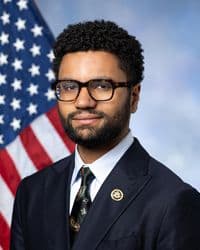
- Maxwell Frost
- Cosponsors
- None
- Introduced
- In Committee
What this bill would do
The Youth Climate Leadership Act of 2026 establishes Youth Advisory Councils within the Environmental Protection Agency, Department of the Interior, Department of Energy, Department of Agriculture, and Department of Commerce. These councils are tasked with providing recommendations to agency heads regarding environmental issues affecting youth communities. The councils will focus on areas such as environmental justice, climate change mitigation, and pollution reduction. Members must be between the ages of 16 and 29 and are required to have demonstrated knowledge in environmental issues. At least half of the council members must come from or work in disadvantaged communities.
Yes· 3 of 10
Would people in their twenties and thirties be better off under this?+7
The bill specifically creates leadership and advisory roles for individuals between the ages of 16 and 29.
Would children be better off under this?+5
The bill addresses environmental issues and climate change that directly impact the future of children.
Would households on low incomes be better off under this?+5
The bill prioritizes environmental justice and resources for disadvantaged communities which often includes low-income areas.
The opposite
No question was scored the opposite.
Who it would affect, and how
Potential Positive Impacts for People
-
Inclusion of Youth Voices: The bill creates a formal way for young people, aged 16 to 29, to provide recommendations on environmental issues and governmental approaches to agency heads (Section 3(a), 3(b)(2)(A)).
-
Support for Disadvantaged Communities: The bill mandates that at least 50 percent of council members must come from, reside in, or work in disadvantaged communities, ensuring these voices are represented (Section 3(b)(2)(D)).
-
Focus on Environmental Justice: The councils are tasked with researching and making recommendations specifically focused on environmental justice, climate change mitigation, and pollution reduction (Section 3(a)(3)).
-
Community Program Recommendations: The councils will provide recommendations regarding programs designed to help governments of disadvantaged communities address their specific environmental issues (Section 3(a)(1)).
-
Public Transparency and Participation: Meetings are generally open to the public, allowing people to attend, appear before the council, or file written comments (Section 3(c)(2), 3(c)(5)).
Potential Negative Impacts for People
- No specific negative impacts or burdens are explicitly identified within the provided text.
Groups and Interests Ranking
Every group the model scored this bill for, from -10 to +10. Hover a score for the reason it gave.
- Demographic And Interest Groups
- Good For Young Adults+7Good For Children+5Good For Low Income Households+5Good For African Americans+4Good For People With Disabilities+3
- Environment Energy And Infrastructure
- Improves Environmental Protections+5Reduces Carbon Emissions+4
- Social Issues And Justice
- Improves Racial Equity+5Improves Poverty Reduction+3
- Governance And Ideology
- Improves Government Transparency+4
- 4/20/2026
- Referred to the Committee on Energy and Commerce, and in addition to the Committees on Natural Resources, and Agriculture, for a period to be subsequently determined by the Speaker, in each case for consideration of such provisions as fall within the jurisdiction of the committee concerned.
- Introduced in House
One bill Congress.gov lists as related to this one — companions in the other chamber, earlier versions, and bills this one absorbed or was folded into.