Bill · H.R. 8296· House(119-HR-8296)
Preparing Superfund for Climate Change Act of 2026
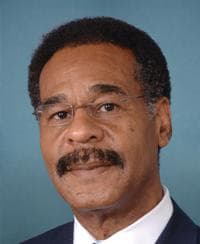
- Introduced
- 4/15/2026
- Last activity
- 4/15/2026 — Referred to the Committee on Energy and Commerce, and in addition to the Committee on Transportation and Infrastructure, for a period to be subsequently determined by the Speaker, in each case for consideration of such provisions as fall within the jurisdiction of the committee concerned.
- Sponsored by
- Emanuel Cleaver
- Cosponsors
- - 3 - 0
- Introduced
- In Committee
What this bill would do
This bill, titled the ``Preparing Superfund for Climate Change Act of 2026'', aims to amend the Comprehensive Environmental Response, Compensation, and Liability Act of 1980. The primary purpose is to provide for the consideration of climate change within the Superfund framework. It modifies how certain assessments are handled by adding considerations for local natural disasters and extreme weather hazards. It also requires the President to include specific assessments in their review process.
Yes· 3 of 20
Does this better protect air, water and wildlife?+8
It updates CERCLA to ensure ongoing safety and remedial actions remain protective against weather and climate risks.
Would households on low incomes be better off under this?+6
Low-income communities are disproportionately situated near hazardous waste sites and benefit significantly from enhanced protections.
Does this improve help for people hit by a disaster?+6
The legislation explicitly incorporates local natural disasters and extreme weather hazards into environmental cleanup planning.
The opposite
No question was scored the opposite.
Who it would affect, and how
Potential Positive Impacts for People
-
Improved Protection against Environmental Hazards: The bill adds a requirement to account for the potential threat to human health and the environment caused by local natural disasters and extreme weather hazards, including those exacerbated by climate change (Section 2, subsection (b)(1)(H)).
-
Enhanced Review of Remedial Actions: The President would be required to assess whether a selected remedial action remains protective after considering projected changes in disasters and weather hazards due to climate change (Section 2, subsection (c)).
Potential Negative Impacts for People
- No negative impacts or burdens are explicitly mentioned in the provided text.
Groups and Interests Ranking
Every group the model scored this bill for, from -10 to +10. Hover a score for the reason it gave.
- Demographic And Interest Groups
- Good For Low Income Households+6Good For African Americans+5Good For Children+5Good For Hispanic Americans+5Good For Middle Aged+5Good For Retirees+5Good For Urban Residents+5Good For Young Adults+5Good For Immigrants+4Good For Men+4Good For Middle Class Households+4Good For Native Americans+4Good For Rural Residents+4Good For Women+4
- Environment Energy And Infrastructure
- Improves Environmental Protections+8Improves Disaster Relief And F E M A+6Improves Public Land Management+6Reduces Carbon Emissions+5
- Governance And Ideology
- Increases Federal Power+4Improves Government Transparency+3
- 4/15/2026
- Referred to the Committee on Energy and Commerce, and in addition to the Committee on Transportation and Infrastructure, for a period to be subsequently determined by the Speaker, in each case for consideration of such provisions as fall within the jurisdiction of the committee concerned.
- 3 Cosponsors added.
- Introduced in House
One bill Congress.gov lists as related to this one — companions in the other chamber, earlier versions, and bills this one absorbed or was folded into.
 Raja Krishnamoorthi
Democrat · Illinois
 Sydney Kamlager-Dove
Democrat · California
 Rashida Tlaib
Democrat · Michigan