Bill · H.R. 8290· House(119-HR-8290)
China Exchange Rate Accountability Act of 2026
- Introduced
- 4/15/2026
- Last activity
- 6/18/2026 — Placed on the Union Calendar, Calendar No. 611.
- Sponsored by
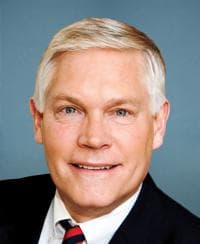
- Pete Sessions
- Cosponsors
- None
- Introduced
- On Calendar
What this bill would do
This bill, known as the "China Exchange Rate Accountability Act of 2026," seeks to regulate how the United States interacts with the International Monetary Fund regarding the People's Republic of China. It requires the Secretary of the Treasury to evaluate if China is meeting specific exchange rate and data transparency criteria. If China fails to meet these standards, the Secretary must instruct the U.S. vote to oppose any increase in China's voting power at the Fund. The President has the authority to waive this opposition if it is in the national interest. Finally, these provisions are set to expire seven years after enactment.
Yes· 3 of 8
Does this make trade with other countries easier?+2
The bill aims to ensure more equitable trade competition by requiring transparency in exchange rate policies.
Would business owners be better off under this?+1
By addressing potential unfair trade advantages, the bill may benefit domestic business owners.
Would farmers be better off under this?+1
Stabilizing exchange rates can help protect domestic agricultural exporters from unfair trade advantages.
The opposite
No question was scored the opposite.
Who it would affect, and how
Potential Positive Impacts for People
-
Increased Accountability for Trade Practices: The bill requires the Secretary of the Treasury to check if the People's Republic of China is managing its exchange rate to gain an unfair competitive advantage in international trade (Section 2(a)(3)).
-
Promoting Financial Transparency: The bill mandates a determination of whether the People's Republic of China maintains transparent exchange rate policies and publishes credible balance of payments data (Section 2(a)(2)).
-
Ensuring Compliance with International Obligations: The Secretary must determine if China has violated its obligations under Article VIII of the Articles of Agreement of the Fund (Section 2(a)(1)).
Potential Negative Impacts for People
-
Presidential Discretionary Power: The President has the ability to waive the requirement to oppose the voting power increase if they determine it is important to the national interest (Section 2(c)).
-
Temporary Duration: The specific provisions regarding the opposition to voting power increases will cease to have force or effect 7 years after the date of enactment (Section 2(e)).
Groups and Interests Ranking
Every group the model scored this bill for, from -10 to +10. Hover a score for the reason it gave.
- Demographic And Interest Groups
- Good For Business Owners+1Good For Farmers+1Good For Union Workers+1
- National Security And Foreign Policy
- Improves International Trade+2Improves International Alliances+1
- Governance And Ideology
- Improves Government Transparency+1Increases Federal Power+1
- Economy And Finance
- Improves Economic Growth+1
- 6/18/2026
- Reported (Amended) by the Committee on Financial Services. H. Rept. 119-703.
- Placed on the Union Calendar, Calendar No. 611.
- 4/21/2026
- Committee Consideration and Mark-up Session Held
- Ordered to be Reported by the Yeas and Nays: 32 - 20.
- 4/15/2026
- Referred to the House Committee on Financial Services.
- Introduced in House