Bill · H.R. 8249· House(119-HR-8249)
Making Reviews Certain Act
- Introduced
- 4/13/2026
- Last activity
- 4/13/2026 — Referred to the House Committee on Natural Resources.
- Sponsored by
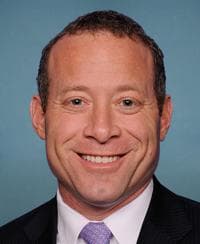
- Josh Gottheimer
- Cosponsors
- None
- Introduced
- In Committee
What this bill would do
The "Making Reviews Certain Act" seeks to amend the National Environmental Policy Act of 1969. It aims to clarify the scope of review by defining which environmental effects agencies must consider. The bill establishes specific limits on judicial review for actions related to energy infrastructure. It also sets new requirements for filing claims and limits the ability of courts to vacate agency actions. Additionally, the bill provides new definitions for "reasonably foreseeable" environmental effects.
Yes
No question was scored yes.
The opposite· 3 of 7
Does this better protect air, water and wildlife?-6
The bill limits the scope of environmental review to only proximate effects and restricts the ability of courts to vacate actions that harm the environment.
Would Native Americans be better off under this?-4
The limitations on judicial review and scope of environmental effects could reduce protections for lands often held by or near indigenous communities.
Does this make what the government does easier for the public to see?-3
The bill implements stricter standing and comment requirements that may limit public oversight of energy infrastructure projects.
Who it would affect, and how
Potential Positive Impacts for People
-
Clarified Scope of Review: Under Section 2, Federal agencies are only required to consider effects that have a "reasonably close causal relationship to, and are proximately caused by, the immediate project or action under consideration." This provides a specific standard for what agencies must include in their environmental documents.
-
Standardized Definitions: Section 4 updates the term "reasonably foreseeable" to mean effects that share a "reasonably close causal relationship to, and are proximately caused by, the immediate project or action under consideration." This creates a specific definition for agencies to follow when considering environmental effects.
-
Clearer Guidelines for Energy Infrastructure Projects: Section 3(a)(2) provides a specific definition for "energy infrastructure," which includes facilities and equipment used for the identification, leasing, development, production, processing, transportation, transmission, refining, and generation of energy.
Potential Negative Impacts for People
-
Restricted Ability to Challenge Agency Actions: Section 3(a)(1) creates several hurdles for those seeking to challenge agency actions related to energy infrastructure. For example, claims must be filed within 180 days (Section 3(a)(1)(A)), and parties must have suffered or will imminently suffer direct harm (Section 3(a)(1)(C)).
-
Strict Requirements for Public Comments: Under Section 3(a)(1)(B), a party can only challenge an action if they submitted a "substantive and unique comment" during the public comment period that was "sufficiently detailed to put the applicable Federal agency on notice of the issue."
-
Limitations on Court Powers to Stop Projects: Section 3(b)(1) limits a court's ability to vacate an agency action unless the court determines the action poses a "significant risk of a proximate and substantial environmental harm" and no other equitable remedy is available.
-
Allowing Projects to Proceed During Corrections: Section 3(b)(2)(B) allows a major Federal action to continue even if a court has remanded an environmental document to an agency to correct errors or deficiencies.
Groups and Interests Ranking
Every group the model scored this bill for, from -10 to +10. Hover a score for the reason it gave.
- Demographic And Interest Groups
- Good For Native Americans-4Good For African Americans-2Good For Hispanic Americans-2Good For Low Income Households-2Good For Urban Residents-2
- Environment Energy And Infrastructure
- Improves Environmental Protections-6
- Governance And Ideology
- Improves Government Transparency-3
- 4/13/2026
- Referred to the House Committee on Natural Resources.
- Introduced in House