Bill · H.R. 8218· House(119-HR-8218)
Fair Compensation for Truck Crash Victims Act
- Introduced
- 4/9/2026
- Last activity
- 4/9/2026 — Referred to the House Committee on Transportation and Infrastructure.
- Sponsored by
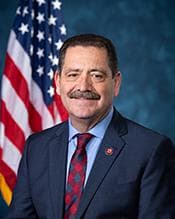
- Jesús García
- Cosponsors
- - 5 - 0
- Introduced
- In Committee
What this bill would do
The "Fair Compensation for Truck Crash Victims Act" aims to increase the minimum financial responsibility requirements for transporting property. It raises the minimum amount from $750,000 to $5,000,000. The bill also requires the Secretary, working with the Bureau of Labor Statistics, to adjust this amount every five years based on medical care inflation. These changes would take effect one year after the Act is passed.
Yes· 3 of 6
Does this give people more protection from unfair business practices?+6
Increases the financial recovery available to victims of truck crashes, acting as a form of public protection.
Would people with disabilities be better off under this?+5
Increases funds available for long-term care and accessibility needs after a catastrophic crash.
Would households on low incomes be better off under this?+4
Low-income victims of accidents are more likely to be adequately compensated by higher insurance minimums.
The opposite
Would business owners be better off under this?-6
Trucking company owners will face significantly higher operational costs for insurance.
Does this make it easier to run a small business?-4
Small trucking businesses will face significantly higher insurance costs due to the increased minimum financial responsibility.
Would farmers be better off under this?-3
Farmers who transport their own produce may face increased insurance costs.
Who it would affect, and how
Potential Positive Impacts for People
-
Increased Victim Compensation: By increasing the minimum financial responsibility to $5,000,000 (Section 3(a)(1)), there is a higher level of coverage available for those affected by truck crashes.
-
Protection Against Inflation: The requirement to adjust the minimum level quinquennially for medical care inflation (Section 3(a)(2)) ensures that the coverage amount keeps up with the rising cost of medical treatment.
-
Enhanced Public Safety: According to the findings in Section 2(1), increasing financial responsibility is intended to encourage carriers to use practices and procedures that improve equipment safety to better protect the public.
Potential Negative Impacts for People
- Higher Costs for Carriers: While not explicitly detailed as a cost, Section 3(a)(1) mandates a significant increase in the minimum financial responsibility from $750,000 to $5,000,000, which imposes a higher financial requirement on those transporting property.
Groups and Interests Ranking
Every group the model scored this bill for, from -10 to +10. Hover a score for the reason it gave.
- Demographic And Interest Groups
- Good For People With Disabilities+5Good For Low Income Households+4Good For Middle Class Households+4Good For Business Owners-6Good For Farmers-3
- Healthcare
- Improves Healthcare Access+3
- Economy And Finance
- Improves Consumer Protection+6Improves Small Business Support-4
- Governance And Ideology
- Increases Federal Power+2
- 4/9/2026
- Referred to the House Committee on Transportation and Infrastructure.
- 5 Cosponsors added.
- Introduced in House
 Steve Cohen
Democrat · Tennessee
 John Garamendi
Democrat · California
 Jared Huffman
Democrat · California
 Henry Johnson
Democrat · Georgia
 Derek Tran
Democrat · California