Bill · H.R. 8157· House(119-HR-8157)
Risk-based Oversight for Integrity Act
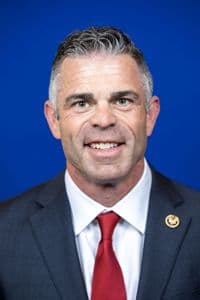
- Introduced
- 3/27/2026
- Last activity
- 4/3/2026 — Referred to the Subcommittee on Nutrition and Foreign Agriculture.
- Sponsored by
- Tony Wied
- Cosponsors
- - 0 - 1
- Introduced
- In Committee
What this bill would do
The Risk-based Oversight for Integrity Act aims to modernize the oversight of organic products by amending the Organic Foods Production Act of 1990. The bill introduces a definition for "risk to organic integrity" and "oversight protocols." It changes inspection requirements for domestic farms and handling operations to allow for virtual inspections under certain conditions. Additionally, the bill directs the Secretary to conduct a comprehensive study on implementing oversight protocols based on risk. The Secretary will then be authorized to issue regulations to modify oversight protocols based on the study's findings.
Yes· 3 of 7
Would business owners be better off under this?+5
The bill allows for reduced oversight costs and administrative burdens for certified organic farms and handling operations.
Would farmers be better off under this?+5
The bill provides potential cost reductions and modernized, flexible inspection methods for organic farmers.
Does this make it easier to run a small business?+4
The bill seeks to reduce oversight costs and administrative burdens for organic farms and handling operations through risk-based protocols.
The opposite
No question was scored the opposite.
Who it would affect, and how
Potential Positive Impacts for People
-
Reduced Administrative Burdens: The Secretary may issue regulations intended to reduce oversight costs and administrative burdens for certified organic farms, handling operations, and certifying agents that present a lower risk to organic integrity (Section 4, subsection (e)(2)(A)).
-
Modernized Inspection Methods: For domestic farm or handling operation sites, annual inspections may be conducted on-site or virtually based on the risk to organic integrity, as determined by the Secretary (Section 3, subsection (5)(B)).
-
Increased Guidance: The Secretary's study examines the possibility of providing increased guidance and interpretations of standards and criteria from the National Organic Program to certifying agents, organic farms, and handling operations (Section 4, subsection (b)(1)(E)).
-
Efficient Resource Allocation: Oversight resources may be prioritized for activities that present a higher risk to organic integrity (Section 4, subsection (e)(2)(B)).
Potential Negative Impacts for People
-
Changes to On-Site Inspections: For domestic farm or handling operations, on-site inspections would occur once every three years, with intervening annual inspections potentially being conducted virtually depending on the risk determined by the Secretary (Section 3, subsection (5)(B)).
-
Modified Inspection Methods for Certain Operations: Handling operations that acquire but do not physically receive, process, package, or store organic products may be subject to inspection methods, including virtual methods, as determined by the Secretary (Section 3, subsection (5)(C)).
Groups and Interests Ranking
Every group the model scored this bill for, from -10 to +10. Hover a score for the reason it gave.
- Demographic And Interest Groups
- Good For Business Owners+5Good For Farmers+5
- Economy And Finance
- Improves Small Business Support+4Improves Economic Growth+3
- Environment Energy And Infrastructure
- Improves Environmental Protections+2Improves Rural Development+2
- Governance And Ideology
- Improves Government Transparency+2
- 4/3/2026
- Referred to the Subcommittee on Forestry and Horticulture.
- Referred to the Subcommittee on Nutrition and Foreign Agriculture.
- 3/27/2026
- Referred to the House Committee on Agriculture.
- 1 Cosponsor added.
- Introduced in House
One bill Congress.gov lists as related to this one — companions in the other chamber, earlier versions, and bills this one absorbed or was folded into.
 Josh Riley
Democrat · New York