Bill · H.R. 8129· House(119-HR-8129)
To amend title XVIII of the Social Security Act to establish a full risk ACO program.
- Introduced
- 3/26/2026
- Last activity
- 3/26/2026 — Referred to the Committee on Ways and Means, and in addition to the Committee on Energy and Commerce, for a period to be subsequently determined by the Speaker, in each case for consideration of such provisions as fall within the jurisdiction of the committee concerned.
- Sponsored by
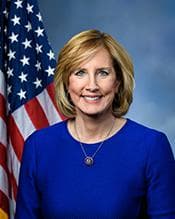
- Claudia Tenney
- Cosponsors
- - 0 - 2
- Introduced
- In Committee
What this bill would do
This bill proposes to amend the Social Security Act to establish a permanent "full risk" Accountable Care Organization (ACO) program. The program aims to improve health outcomes and lower costs for Traditional Medicare beneficiaries by allowing groups of healthcare professionals to manage care through "standard" or "complex care" tracks. Under this model, ACOs would take on full financial risk, sharing in both savings and losses. This shift moves away from traditional fee-for-service payments toward more flexible capitation models. The Secretary of Health and Human Services is tasked with establishing the program by June 30, 2026.
Yes· 3 of 7
Would people over 65 be better off under this?+5
The bill aims to improve health outcomes and care coordination for traditional Medicare beneficiaries.
Would people in rural areas be better off under this?+4
The bill explicitly states that organizations serving rural areas would benefit from these permanent options.
Does this make health care easier to get in general?+4
The bill emphasizes flexible care settings, including in-home, behavioral health, and non-visit-based care options.
The opposite
No question was scored the opposite.
Who it would affect, and how
Potential Positive Impacts for People
-
Improved Health Outcomes and Lower Costs: The bill finds that full risk ACOs can improve health outcomes while lowering costs for traditional Medicare (Section 1899B(a)(1)).
-
Better Care for Complex Patients: The program encourages better care coordination specifically for beneficiaries with six or more chronic conditions (Section 1899B(a)(5)).
-
Increased Flexibility in Care Delivery: The program allows for individualized care that can include social support, behavioral health, in-home care, and nonvisit-based care such as email or video (Section 1899B(c)(3)).
-
Benefits for Underserved Areas: The bill notes that various organizations in rural and underserved areas would benefit from these permanent options (Section 1899B(a)(3)).
-
Patient Choice and Control: Medicare beneficiaries retain the ability to opt out of participating in the full risk ACO program (Section 1899B(f)(3)).
Potential Negative Impacts for People
-
Financial Risk for Providers: ACOs participating in the full risk arrangement must share in 100 percent of the losses (Section 1899B(d)(2)(A) and (B)(i)).
-
Reduction in Traditional Payments: Providers who elect to participate in Total Care Capitation must agree to a 100 percent reduction of their fee-for-service claims (Section 1899B(d)(1)(B)).
Groups and Interests Ranking
Every group the model scored this bill for, from -10 to +10. Hover a score for the reason it gave.
- Demographic And Interest Groups
- Good For Seniors+5Good For Rural Residents+4Good For Low Income Households+2
- Healthcare
- Improves Healthcare Access+4Increases Medicare Funding+2
- Economy And Finance
- Reduces Government Spending+3
- Social Issues And Justice
- Improves Poverty Reduction+1
- 8/6/2026
- 1 Cosponsor added.
- 3/26/2026
- Referred to the Committee on Ways and Means, and in addition to the Committee on Energy and Commerce, for a period to be subsequently determined by the Speaker, in each case for consideration of such provisions as fall within the jurisdiction of the committee concerned.
- 1 Cosponsor added.
- Introduced in House
 Yvette Clarke
Democrat · New York
 Bradley Schneider
Democrat · Illinois