Bill · H.R. 8117· House(119-HR-8117)
Fair Treatment of Religious Organizations Act of 2026
- Introduced
- 3/26/2026
- Last activity
- 3/26/2026 — Referred to the Committee on Ways and Means, and in addition to the Committee on Oversight and Government Reform, for a period to be subsequently determined by the Speaker, in each case for consideration of such provisions as fall within the jurisdiction of the committee concerned.
- Sponsored by
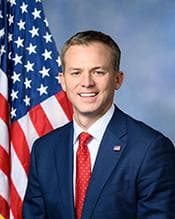
- Blake Moore
- Cosponsors
- - 13 - 0
- Introduced
- In Committee
What this bill would do
The Fair Treatment of Religious Organizations Act of 2026 aims to ensure fair treatment for certain charitable organizations and recipients of Federal financial assistance. It amends the Internal Revenue Code regarding the determination of religious purpose for tax-exempt status. This amendment mandates that religious purpose determinations be made without regard to specific beliefs concerning marriage, sexuality, or gender identity. Additionally, it prevents beliefs from failing a religious purpose test just because they are not central to a system of religion. The bill also prohibits Federal agencies from discriminating against religious employers that receive Federal grants, loans, or contracts. This includes protecting their right to employ persons who share their specific religious standards and beliefs.
Yes· 3 of 6
Does this protect the freedom to practise a religion?+8
The bill strengthens religious freedom by protecting the tax-exempt status and employment rights of religious organizations.
Would business owners be better off under this?+5
The bill provides greater legal certainty and protection for religious employers receiving federal funds.
Does this make it easier to use public money at a school other than the local one?+4
The bill protects religious educational institutions receiving federal assistance from discrimination based on their religious standards.
The opposite
Does this expand the rights of LGBTQ people?-5
The bill allows religious employers to use specific beliefs regarding sexuality and gender identity as a basis for employment practices.
Would LGBTQ people be better off under this?-5
The bill enables employment practices based on religious beliefs concerning sexuality and gender identity that may conflict with LGBTQ rights.
Who it would affect, and how
Potential Positive Impacts for People
-
Protection of Tax-Exempt Status: Under Section 2, organizations can have their religious purpose determined without the government considering their specific beliefs or practices regarding marriage, sexuality, or gender identity. This ensures that a belief is not disqualified simply because it is not central to a system of religion.
-
Protection Against Discrimination in Federal Assistance: Section 3 prohibits Federal branches, departments, or agencies from discriminating against or disadvantaging religious employers (such as corporations, associations, educational institutions, or societies) that receive Federal grants, loans, or contracts. This protects these employers when they take actions consistent with their right to employ persons who share their specific religious standards and beliefs.
Potential Negative Impacts for People
- No negative impacts are explicitly stated in the text provided.
Groups and Interests Ranking
Every group the model scored this bill for, from -10 to +10. Hover a score for the reason it gave.
- Governance And Ideology
- Improves Freedom Of Speech+3Increase States Rights+2
- Education And Technology
- Improves School Choice+4
- Economy And Finance
- Reduces Small Business Taxes+3
- Social Issues And Justice
- Improves Religious Freedom+8Improves L G B T Q Rights-5
- Demographic And Interest Groups
- Good For Business Owners+5Good For L G B T Q Community-5
- 6/11/2026
- 1 Cosponsor added.
- 4/30/2026
- 1 Cosponsor added.
- 4/9/2026
- 2 Cosponsors added.
- 3/30/2026
- 1 Cosponsor added.
- 3/27/2026
- 1 Cosponsor added.
- 3/26/2026
- Referred to the Committee on Ways and Means, and in addition to the Committee on Oversight and Government Reform, for a period to be subsequently determined by the Speaker, in each case for consideration of such provisions as fall within the jurisdiction of the committee concerned.
- 7 Cosponsors added.
- Introduced in House
 Mark Alford
Republican · Missouri
 Ben Cline
Republican · Virginia
 Russ Fulcher
Republican · Idaho
 Glenn Grothman
Republican · Wisconsin
 Lance Gooden
Republican · Texas
 Tracey Mann
Republican · Kansas
 Nathaniel Moran
Republican · Texas
 Celeste Maloy
Republican · Utah
 Burgess Owens
Republican · Utah
 David Schweikert
Republican · Arizona
 W. Steube
Republican · Florida
 Claudia Tenney
Republican · New York
 Tim Walberg
Republican · Michigan