Bill · H.R. 8106· House(119-HR-8106)
RESCUE Act
- Introduced
- 3/26/2026
- Last activity
- 3/26/2026 — Referred to the Committee on Foreign Affairs, and in addition to the Committee on Financial Services, for a period to be subsequently determined by the Speaker, in each case for consideration of such provisions as fall within the jurisdiction of the committee concerned.
- Sponsored by
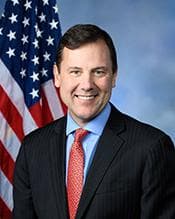
- Thomas Kean
- Cosponsors
- - 1 - 0
- Introduced
- In Committee
What this bill would do
This bill, known as the "Rosatom Energy Sanctions Compliance and Unified Enforcement Act" or the "RESCUE Act," aims to end United States reliance on the Russian nuclear energy sector. It seeks to impose sanctions on Rosatom and other foreign persons operating in the Russian nuclear energy sector to limit the Government of Russia's revenue and influence. The President is required to develop a strategy to decouple the United States from Russian nuclear energy and find alternative suppliers for allies. The legislation includes provisions to block transactions and property of sanctioned entities, though certain exceptions exist for medical and industrial isotopes. Additionally, the bill requires a report regarding the existing 2011 nuclear cooperation agreement with Russia.
Yes
Does this strengthen ties with allied countries?+5
The bill seeks to help U.S. allies and partners find alternative nuclear energy suppliers to end reliance on Russia.
Is this likely to grow the economy?+1
The bill aims to decouple the U.S. from Russian nuclear energy to reduce economic influence of a hostile power.
The opposite
No question was scored the opposite.
Who it would affect, and how
Potential Positive Impacts for People
-
Ending reliance on Russian nuclear energy: The policy seeks to end U.S. reliance on the Russian Federation's nuclear energy sector to counter Russia's unprovoked war of aggression against Ukraine. (Section 2)
-
Supporting allies and partners: The bill aims to work with U.S. allies to find alternative nuclear energy suppliers and help them end their reliance on Rosatom. (Section 2 and Section 3)
-
Protecting the International Atomic Energy Agency's resources: The strategy includes proposed assistance to the International Atomic Energy Agency's international low-enriched uranium fuel bank in Kazakhstan. (Section 3)
-
Ensuring medical and industrial isotope availability: The President may waive sanctions for transactions necessary for the production of medical and industrial isotopes if domestic production is insufficient to meet U.S. requirements. (Section 4)
-
Protecting humanitarian interests: Sanctions do not apply to transactions for the provision of agricultural commodities, food, medicine, medical devices, or humanitarian assistance. (Section 4)
Potential Negative Impacts for People
-
Impact on nuclear energy infrastructure: The strategy identifies the need to replace Rosatom as the primary entity providing reactor safety, operation, and overhaul services for certain existing nuclear reactor fleets. (Section 3)
-
Restrictions on financial institutions: The President may prohibit or impose strict conditions on foreign financial institutions from maintaining correspondent or payable-through accounts in the United States if they facilitate sanctioned activities. (Section 4)
Groups and Interests Ranking
Every group the model scored this bill for, from -10 to +10. Hover a score for the reason it gave.
- National Security And Foreign Policy
- Improves International Alliances+5
- Economy And Finance
- Improves Economic Growth+1
- 7/21/2026
- 1 Cosponsor added.
- 3/26/2026
- Referred to the Committee on Foreign Affairs, and in addition to the Committee on Financial Services, for a period to be subsequently determined by the Speaker, in each case for consideration of such provisions as fall within the jurisdiction of the committee concerned.
- Introduced in House
 Joe Wilson
Republican · South Carolina