Bill · H.R. 805· House(119-HR-805)
End China’s De Minimis Abuse Act
- Introduced
- 1/28/2025
- Last activity
- 1/28/2025 — Referred to the House Committee on Ways and Means.
- Sponsored by
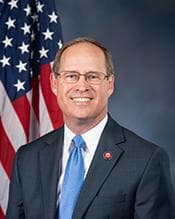
- Gregory Murphy
- Cosponsors
- - 1 - 0
- Introduced
- In Committee
What this bill would do
This bill, titled the "End China's De Minimis Abuse Act," seeks to amend section 321 of the Tariff Act of 1930. It modifies administrative exemptions regarding the admission of articles. The legislation introduces new restrictions on when the $800 exemption can be used. It also mandates specific data reporting requirements for certain articles. Additionally, the bill establishes civil penalties for those who violate these new rules.
Yes
Does this tighten control of the border?+3
The bill enhances customs oversight by requiring specific data reporting for covered articles.
Does this give people more protection from unfair business practices?+2
The bill increases oversight on imported goods that may be subject to trade restrictions.
Does this make what the government does easier for the public to see?+2
The bill mandates more detailed electronic data reporting to U.S. Customs and Border Protection.
The opposite
Would households on low incomes be better off under this?-2
The bill may increase the cost of low-value imported goods by removing certain de minimis exemptions.
Does this make trade with other countries easier?-2
The bill imposes stricter trade enforcement and data requirements on imports from specific countries.
Would people in cities be better off under this?-1
The bill may increase the cost of consumer goods frequently ordered through international e-commerce.
Who it would affect, and how
Potential Positive Impacts for People
-
Prevention of Split Shipments: Under Section 2(a)(1)(b)(i), the privilege of the exemption will not be granted if merchandise covered by a single order or contract is sent in separate lots to try and get the benefit of the subsection.
-
Increased Oversight of Restricted Goods: Section 2(a)(1)(b)(ii) prevents the $800 exemption from being used for articles subject to duties or import restrictions under various laws, including Title VII of the Tariff Act, Section 201 of the Trade Act of 1974, Section 301 of the Trade Act of 1974, and Section 232 of the Trade Expansion Act of 1962.
-
Enhanced Data Collection: Section 2(a)(1)(b)(3)(A) requires that for "covered articles," the 10-digit classification under the Harmonized Tariff Schedule must be provided to U.S. Customs and Border Protection.
Potential Negative Impacts for People
-
Financial Penalties for Violations: Section 2(a)(1)(c) states that any person who enters, introduces, or attempts to introduce an article in violation of this section is liable for a civil penalty of $5,000 for the first violation and $10,000 for each subsequent violation.
-
New Reporting Burdens: Under Section 2(a)(1)(b)(3)(A), "covered articles" (defined as articles from countries with goods subject to section 301 duties) must now have their 10-digit classification provided to U.S. Customs and Border Protection via an authorized electronic data interchange system.
Groups and Interests Ranking
Every group the model scored this bill for, from -10 to +10. Hover a score for the reason it gave.
- Demographic And Interest Groups
- Good For Low Income Households-2Good For Urban Residents-1
- Social Issues And Justice
- Improves Border Security+3
- Economy And Finance
- Improves Consumer Protection+2
- Governance And Ideology
- Improves Government Transparency+2
- National Security And Foreign Policy
- Improves International Trade-2
- 2/24/2025
- 1 Cosponsor added.
- 1/28/2025
- Referred to the House Committee on Ways and Means.
- Introduced in House
 Glenn Thompson
Republican · Pennsylvania