Bill · H.R. 7963· House(119-HR-7963)
No Lifeline for the Dead Act
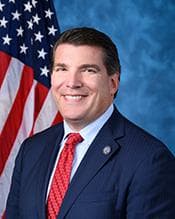
- Introduced
- 3/17/2026
- Last activity
- 3/17/2026 — Referred to the House Committee on Energy and Commerce.
- Sponsored by
- Jay Obernolte
- Cosponsors
- - 1 - 0
- Introduced
- In Committee
What this bill would do
This bill, titled the "No Lifeline for the Dead Act," directs the Federal Communications Commission to improve the Lifeline program. It requires the FCC to create new regulations within 120 days. These regulations mandate that consumer eligibility be determined using specific national verifiers and databases. The bill also requires the reexamination of any consumer whose eligibility was determined without these specific tools. Finally, it restricts eligibility to United States citizens or qualified aliens who provide a Social Security number or Tribal identifier.
Yes
Does this give the federal government more power?+4
The bill mandates the use of national databases and prohibits states from using their own systems for eligibility determination.
Does this reduce what the federal government spends?+3
The bill seeks to tighten eligibility for the Lifeline program through mandatory reexamination and stricter documentation requirements.
Does this make what the government does easier for the public to see?+2
The bill standardizes eligibility through national verifiers and databases to ensure consistency.
The opposite· 3 of 7
Would households on low incomes be better off under this?-4
The bill creates risks of benefit loss through mandatory reexamination and stricter documentation requirements.
Would immigrants be better off under this?-4
The bill limits program eligibility strictly to citizens and specific qualified aliens.
Is this likely to lift people out of poverty?-3
The bill may reduce poverty-relief benefits for individuals found ineligible during the new mandatory reexamination process.
Who it would affect, and how
Potential Positive Impacts for People
-
Standardized Eligibility Verification: The bill requires the use of the National Lifeline Eligibility Verifier and the National Lifeline Accountability Database to determine eligibility (Section 2(a)(1)). This aims to ensure that the determination process is consistent and not based on varying state or other systems.
-
Program Integrity through Reexamination: Any consumer who was previously approved without using the required national tools must have their eligibility reexamined (Section 2(a)(2)(A)). This process ensures that only those who meet the new requirements continue to receive assistance if they are found ineligible during the review (Section 2(a)(2)(B)).
Potential Negative Impacts for People
-
Loss of Benefits for Certain Consumers: Consumers found to be ineligible during the mandatory reexamination process will no longer be eligible for assistance under the Lifeline program (Section 2(a)(2)(B)).
-
Strict Documentation Requirements: To be eligible, a consumer must provide a Social Security number or a Tribal identifier as part of the application process (Section 2(a)(4)). This could prevent those without these specific identifiers from receiving assistance.
-
Limited Eligibility Based on Status: The bill restricts assistance only to those who are citizens of the United States or qualified aliens (Section 2(a)(3)).
Groups and Interests Ranking
Every group the model scored this bill for, from -10 to +10. Hover a score for the reason it gave.
- Demographic And Interest Groups
- Good For Immigrants-4Good For Low Income Households-4Good For Hispanic Americans-2
- Social Issues And Justice
- Improves Poverty Reduction-3Improves Pathway To Citizenship-2Improves Racial Equity-2
- Governance And Ideology
- Increases Federal Power+4Improves Government Transparency+2
- Economy And Finance
- Reduces Government Spending+3
- Education And Technology
- Improves Internet Access-3
- 6/8/2026
- 1 Cosponsor added.
- 3/17/2026
- Referred to the House Committee on Energy and Commerce.
- Introduced in House
 Brandon Gill
Republican · Texas