Bill · H.R. 7959· House(119-HR-7959)
IRS Whistleblower Program Improvement Act
- Introduced
- 3/17/2026
- Last activity
- 4/28/2026 — Received in the Senate and Read twice and referred to the Committee on Finance.
- Sponsored by
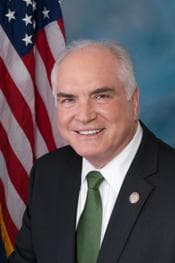
- Mike Kelly
- Cosponsors
- - 4 - 1
- Introduced
- Passed House
- In Senate committee
What this bill would do
This legislation is titled the IRS Whistleblower Program Improvement Act and was passed by the House of Representatives to amend the Internal Revenue Code of 1986. The bill focuses on making several improvements to how whistleblowers are treated by the government. It changes how the Tax Court reviews whistleblower award determinations and provides privacy protections for individuals. Additionally, the bill modifies IRS whistleblower reports, adds interest provisions for delayed awards, and corrects deductions for attorney's fees.
Yes· 3 of 5
Does this protect people from being watched or searched?+5
The bill allows whistleblowers to elect to proceed anonymously before the Tax Court.
Does this make what the government does easier for the public to see?+3
The bill requires the IRS to include descriptions of top tax avoidance schemes in its annual report.
Does this raise taxes on the highest earners?+3
The bill improves the oversight of top tax avoidance schemes which are frequently utilized by high earners.
The opposite
Would high-income households be better off under this?-2
The bill increases scrutiny on top tax avoidance schemes used by high-income entities.
What Congress actually voted on
One recorded vote has been taken on this bill.
- The House: a fast-track vote, needing two-thirds to passPassed 346–10
The House sets aside its normal procedure to move quickly: no amendments, little debate, and a two-thirds bar instead of a simple majority. It is used for measures expected to be uncontroversial, so a bill that fails here failed despite broad expectations that it would not.
04/27/2026 · Roll call 138 · recorded as “On Motion to Suspend the Rules and Pass, as Amended”
Who it would affect, and how
Potential Positive Impacts for People
-
Section 2: This section establishes that Tax Court reviews of whistleblower award determinations will be de novo and can include newly discovered or previously unavailable evidence. This could benefit whistleblowers by giving them a fairer and more thorough review of their cases.
-
Section 3: This section adds whistleblower privacy protections by allowing individuals to elect to proceed anonymously before the Tax Court unless the court finds a societal interest in disclosing their identity. This is a positive outcome for individuals because it protects them from potential harm or retaliation caused by having their identity exposed.
-
Section 4: This section modifies the IRS whistleblower report to include a list and descriptions of the top tax avoidance schemes disclosed by whistleblowers during the year. This benefits the public by providing more transparent information about the types of tax schemes being uncovered.
-
Section 5: This section requires that the amount of any whistleblower award shall include interest if the Secretary fails to provide notice of a preliminary award recommendation before a specific applicable date. This benefits whistleblowers by ensuring they receive added financial compensation if the government drags its feet in paying out their awards.
-
Section 6: This section corrects the code regarding deductions for attorney's fees by changing a reference from section 7623(b) to just 7623. This is a positive change because it broadens the scope of attorney's fee deductions for whistleblowers.
Potential Negative Impacts for People
Based on the provided text, there are no explicitly stated negative impacts or burdens for individuals or groups of people in the United States.
Groups and Interests Ranking
Every group the model scored this bill for, from -10 to +10. Hover a score for the reason it gave.
- Governance And Ideology
- Improves Privacy Rights+5Improves Government Transparency+3
- Economy And Finance
- Increases Wealthy Taxes+3Improves Fiscal Responsibility+2
- Demographic And Interest Groups
- Good For Union Workers+2Good For High Income Households-2
- 4/28/2026
- Received in the Senate and Read twice and referred to the Committee on Finance.
- 4/27/2026
- Motion to reconsider laid on the table Agreed to without objection.
- Passed/agreed to in House: On motion to suspend the rules and pass the bill, as amended Agreed to by the Yeas and Nays: (2/3 required): 346 - 10 (Roll no. 138). (text: CR H3104)
- On motion to suspend the rules and pass the bill, as amended Agreed to by the Yeas and Nays: (2/3 required): 346 - 10 (Roll no. 138). (text: CR H3104)
- Considered as unfinished business. (consideration: CR H3117-3118)
- At the conclusion of debate, the Yeas and Nays were demanded and ordered. Pursuant to the provisions of clause 8, rule XX, the Chair announced that further proceedings on the motion would be postponed.
- DEBATE - The House proceeded with forty minutes of debate on H.R. 7959.
- Considered under suspension of the rules. (consideration: CR H3104-3106)
- Mr. Smith (MO) moved to suspend the rules and pass the bill, as amended.
- 4/9/2026
- Reported (Amended) by the Committee on Ways and Means. H. Rept. 119-606.
- Placed on the Union Calendar, Calendar No. 526.
- 3/25/2026
- Committee Consideration and Mark-up Session Held
- Ordered to be Reported in the Nature of a Substitute by the Yeas and Nays: 41 - 0.
- 3/24/2026
- 4 Cosponsors added.
- 3/17/2026
- Referred to the House Committee on Ways and Means.
- 1 Cosponsor added.
- Introduced in House
3 bills Congress.gov lists as related to this one — companions in the other chamber, earlier versions, and bills this one absorbed or was folded into.
 Vern Buchanan
Republican · Florida
 Carol Miller
Republican · West Virginia
 Nathaniel Moran
Republican · Texas
 Adrian Smith
Republican · Nebraska
 Mike Thompson
Democrat · California