Bill · H.R. 787· House(119-HR-787)
Plain Language in Contracting Act
- Introduced
- 1/28/2025
- Last activity
- 6/4/2025 — Received in the Senate and Read twice and referred to the Committee on Small Business and Entrepreneurship.
- Sponsored by
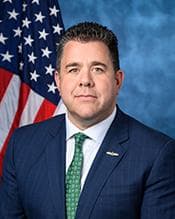
- Nick LaLota
- Cosponsors
- - 0 - 3
- Introduced
- Passed House
- In Senate committee
What this bill would do
The Plain Language in Contracting Act requires Federal agencies to change how they write certain notices. These notices must be clear, concise, and easy for small businesses to understand. The act also requires that key words be included so businesses can easily find contract opportunities through the government-wide point of entry. The Administrator of the Small Business Administration is tasked with issuing rules to implement these changes within 90 days. This legislation does not authorize any additional funds.
Yes
Would business owners be better off under this?+6
The act specifically aids small business owners by making federal contract notices easier to find and understand.
Does this make it easier to run a small business?+6
The act enhances small business accessibility to federal contracts through clearer and more searchable procurement notices.
Does this make what the government does easier for the public to see?+5
By requiring plain language, the act increases transparency in how federal procurement opportunities are communicated.
The opposite
No question was scored the opposite.
Who it would affect, and how
Potential Positive Impacts for People
-
Improved Understanding of Opportunities: By requiring notices to be written so a small business concern can easily understand the intent, the act helps business owners grasp what the government is looking for (Section 2(a)(1)).
-
Better Organization and Clarity: The requirement for notices to be clear, concise, and well-organized ensures that information is not unnecessarily complicated (Section 2(a)(2)(A)).
-
Easier Identification of Contracts: Including key words in descriptions helps small business concerns easily identify and understand contract opportunities when using the Government-wide point of entry (Section 2(b)).
Potential Negative Impacts for People
- No specific negative impacts are mentioned in the text: The provided text does not list any negative consequences or burdens resulting from the requirements of this Act.
Groups and Interests Ranking
Every group the model scored this bill for, from -10 to +10. Hover a score for the reason it gave.
- Demographic And Interest Groups
- Good For Business Owners+6
- Economy And Finance
- Improves Small Business Support+6
- Governance And Ideology
- Improves Government Transparency+5
- 6/4/2025
- Received in the Senate and Read twice and referred to the Committee on Small Business and Entrepreneurship.
- 6/3/2025
- Motion to reconsider laid on the table Agreed to without objection.
- Passed/agreed to in House: On motion to suspend the rules and pass the bill, as amended Agreed to by voice vote. (text: CR H2395)
- On motion to suspend the rules and pass the bill, as amended Agreed to by voice vote. (text: CR H2395)
- DEBATE - The House proceeded with forty minutes of debate on H.R. 787.
- Considered under suspension of the rules. (consideration: CR H2395-2396)
- Mr. Williams (TX) moved to suspend the rules and pass the bill, as amended.
- 3/24/2025
- Reported (Amended) by the Committee on Small Business. H. Rept. 119-34.
- Placed on the Union Calendar, Calendar No. 23.
- 3/5/2025
- Committee Consideration and Mark-up Session Held
- Ordered to be Reported (Amended) by the Yeas and Nays: 25 - 0.
- 3/4/2025
- 1 Cosponsor added.
- 1/28/2025
- Referred to the House Committee on Small Business.
- 2 Cosponsors added.
- Introduced in House
 Maggie Goodlander
Democrat · New Hampshire
 Shri Thanedar
Democrat · Michigan
 Derek Tran
Democrat · California