Bill · H.R. 7868· House(119-HR-7868)
Expanding Support for Living Donors Act of 2026
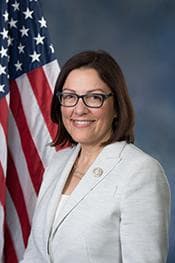
- Introduced
- 3/9/2026
- Last activity
- 3/9/2026 — Referred to the Committee on Energy and Commerce, and in addition to the Committee on Ways and Means, for a period to be subsequently determined by the Speaker, in each case for consideration of such provisions as fall within the jurisdiction of the committee concerned.
- Sponsored by
- Suzan DelBene
- Cosponsors
- - 2 - 1
- Introduced
- In Committee
What this bill would do
The Expanding Support for Living Donors Act of 2026 seeks to amend the Public Health Service Act regarding the Living Organ Donation Reimbursement Program. It establishes that grant recipients cannot limit reimbursement eligibility based on an individual's income if their household income is at or below 700 percent of the poverty line. The bill sets a reimbursement cap of $10,000 for fiscal year 2027, with subsequent years adjusted by the Consumer Price Index. The Secretary of Health and Human Services is granted the authority to lower these maximum amounts if there are insufficient funds. Finally, the Act requires annual reports to Congress and a GAO study on how Medicare might pay these costs in the future.
Yes· 3 of 8
Would households on low incomes be better off under this?+5
The bill prohibits grant recipients from limiting reimbursement eligibility based on income for those at or below 700 percent of the poverty line.
Does this make health care easier to get in general?+5
The bill expands reimbursement eligibility for living donors regardless of income if they are below 700% of the poverty line, making donation more feasible.
Does this make what the government does easier for the public to see?+3
The bill requires the Secretary to submit an annual public report to Congress detailing program impacts and challenges.
The opposite
No question was scored the opposite.
Who it would affect, and how
Potential Positive Impacts for People
-
Expanded Eligibility for Donors: Grant recipients are prohibited from limiting reimbursement eligibility based on income for individuals whose household income is at or below 700 percent of the poverty line. Section 2, Subsection (f)(1).
-
Inflation-Adjusted Reimbursements: The maximum permissible amount for reimbursement is adjusted annually by the total percentage change in the Consumer Price Index for all urban consumers, ensuring the amount keeps up with inflation. Section 2, Subsection (g)(2)(A).
-
Financial Protection for Current Donors: If the Secretary decides to lower the maximum reimbursement amount due to insufficient funds, this decision does not affect the amount of reimbursement for any approved donating individual prior to that determination. Section 2, Subsection (g)(2)(C)(i).
Potential Negative Impacts for People
- Reduced Reimbursement Due to Funding Shortages: The Secretary has the authority to lower the maximum permissible amount of reimbursement if they determine that a recipient has insufficient funds to provide the full amount to all donating individuals. Section 2, Subsection (g)(2)(B).
Groups and Interests Ranking
Every group the model scored this bill for, from -10 to +10. Hover a score for the reason it gave.
- Demographic And Interest Groups
- Good For Low Income Households+5Good For Middle Class Households+2
- Healthcare
- Improves Healthcare Access+5Increases Medicare Funding+1
- Social Issues And Justice
- Improves Poverty Reduction+2Improves Racial Equity+2
- Governance And Ideology
- Improves Government Transparency+3
- Economy And Finance
- Improves Economic Growth+1
- 6/8/2026
- 1 Cosponsor added.
- 3/9/2026
- Referred to the Committee on Energy and Commerce, and in addition to the Committee on Ways and Means, for a period to be subsequently determined by the Speaker, in each case for consideration of such provisions as fall within the jurisdiction of the committee concerned.
- 2 Cosponsors added.
- Introduced in House
 Carol Miller
Republican · West Virginia
 Sarah McBride
Democrat · Delaware
 Kim Schrier
Democrat · Washington