Bill · H.R. 7847· House(119-HR-7847)
Stop Unemployment Fraud Act
- Introduced
- 3/5/2026
- Last activity
- 3/5/2026 — Referred to the House Committee on Ways and Means.
- Sponsored by
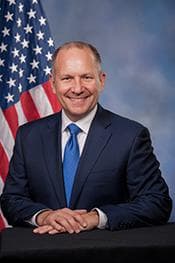
- Lloyd Smucker
- Cosponsors
- - 17 - 0
- Introduced
- In Committee
What this bill would do
The Stop Unemployment Fraud Act aims to amend the Social Security Act and the Federal Unemployment Tax Act to prevent fraud. It requires State agencies to implement strict identity verification procedures using government-issued and supporting documentation. The bill mandates data matching practices to detect improper payments regarding new hires, incarcerated individuals, and deceased individuals. It also prohibits using self-attestation alone to prove eligibility for compensation. Furthermore, the Act strengthens work search requirements by requiring claimants to maintain and provide records of their job searches.
Yes
Does this reduce what the federal government spends?+4
The bill implements data matching and stricter verification to detect and prevent improper unemployment payments.
Does this make what the government does easier for the public to see?+2
The bill mandates data matching and stricter verification processes to ensure the integrity of unemployment compensation.
The opposite· 3 of 7
Would households on low incomes be better off under this?-4
The increased burden of documentation and strict work search requirements could disproportionately impact low-income claimants.
Is this likely to lift people out of poverty?-3
Stricter identity verification and job search requirements may delay or reduce access to unemployment benefits for low-income individuals.
Would people over 65 be better off under this?-2
The bill's verification requirements could cause delays for seniors who may find providing specific documentation more difficult.
Who it would affect, and how
Potential Positive Impacts for People
-
Prevention of Fraud and Improper Payments: The bill implements data matching through an integrity data hub and comparisons with the National Directory of New Hires, information on incarcerated individuals, and data regarding deceased individuals to detect fraud (Section 3).
-
Protection of Claimant Rights: Regulations for identity verification must include due process protections for claimants (Section 2).
-
Fairness in Claims Processing: Verification procedures are required to ensure they do not result in the flagging, denial, or delay of claims based on personal characteristics such as race, color, religion, sex, national origin, age, disability, or political affiliation (Section 2).
-
Safeguards Against Systematic Errors: The Secretary of Labor must ensure that documentation requirements do not produce systematic mismatches that unfairly deny or delay unemployment compensation payments (Section 2).
-
Infrastructure Improvements: States may use up to 5 percent of recovered overpayments to modernize their unemployment insurance technology infrastructure (Section 7).
Potential Negative Impacts for People
-
Increased Burden of Documentation: Claimants must provide at least one valid Federal or State government-issued identification document along with one or more supporting documents, such as utility bills or lease agreements, to verify their identity (Section 2).
-
Delay in Receiving Payments: Payments shall not be made prior to the determination of eligibility, which includes the required identity verification process (Section 4).
-
Increased Requirements for Job Seekers: To be considered as actively seeking work, individuals must now register for employment services and maintain a specific record of employers contacted, including the method and date of contact, which must be provided to the State agency each week (Section 6).
-
Strict Proof Standards: A claimant's self-attestation or self-certification will no longer be sufficient on its own to prove eligibility for compensation (Section 4).
Groups and Interests Ranking
Every group the model scored this bill for, from -10 to +10. Hover a score for the reason it gave.
- Demographic And Interest Groups
- Good For Low Income Households-4Good For Seniors-2Good For African Americans-1Good For Urban Residents-1
- Social Issues And Justice
- Improves Poverty Reduction-3Improves Disability Rights-2
- Economy And Finance
- Reduces Government Spending+4
- Governance And Ideology
- Improves Government Transparency+2Improves Privacy Rights-2
- 7/20/2026
- 1 Cosponsor added.
- 6/24/2026
- 1 Cosponsor added.
- 3/5/2026
- Referred to the House Committee on Ways and Means.
- 15 Cosponsors added.
- Introduced in House
One bill Congress.gov lists as related to this one — companions in the other chamber, earlier versions, and bills this one absorbed or was folded into.
 Jodey Arrington
Republican · Texas
 Vern Buchanan
Republican · Florida
 Aaron Bean
Republican · Florida
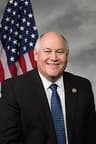 Ron Estes
Republican · Kansas
 Randy Feenstra
Republican · Iowa
 Vince Fong
Republican · California
 Mike Kelly
Republican · Pennsylvania
 David Kustoff
Republican · Tennessee
 Carol Miller
Republican · West Virginia
 Blake Moore
Republican · Utah
 Max Miller
Republican · Ohio
 Nathaniel Moran
Republican · Texas
 Adrian Smith
Republican · Nebraska
 W. Steube
Republican · Florida
 Claudia Tenney
Republican · New York
 Beth Van Duyne
Republican · Texas
 Rudy Yakym
Republican · Indiana