Bill · H.R. 7786· House(119-HR-7786)
AI Fraud Accountability Act
- Introduced
- 3/4/2026
- Last activity
- 3/4/2026 — Referred to the Committee on Energy and Commerce, and in addition to the Committees on the Judiciary, Science, Space, and Technology, and Foreign Affairs, for a period to be subsequently determined by the Speaker, in each case for consideration of such provisions as fall within the jurisdiction of the committee concerned.
- Sponsored by
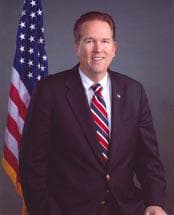
- Vern Buchanan
- Cosponsors
- - 1 - 1
- Introduced
- In Committee
What this bill would do
The AI Fraud Accountability Act aims to establish protections against digital impersonation fraud. It creates criminal prohibitions against using digital impersonations—which include AI-generated visual or audio depictions of real or imaginary people—to defraud individuals of money or property. The bill grants the Federal Trade Commission authority to enforce these protections against unfair or deceptive practices. Additionally, it establishes a technical working group led by NIST to develop best practices for detecting and preventing these crimes. The Act also encourages international cooperation to track and prosecute violations originating in other countries.
Yes· 3 of 8
Does this give people more protection from unfair business practices?+6
The bill provides strong protections against digital impersonation fraud which protects consumers from deceptive digital practices.
Does this give people more control over their personal data?+5
The bill protects individual identities from being used in unauthorized digital deceptions.
Does this better protect the country from computer attacks?+5
The bill enhances security against digital impersonation and AI-driven fraud.
The opposite
No question was scored the opposite.
Who it would affect, and how
Potential Positive Impacts for People
-
Criminal Penalties for Fraudsters: The bill establishes that people who use digital impersonations to defraud others face fines and up to 3 years in prison (Section 2).
-
Protection Against Intimidation: Individuals are protected from those who threaten to use digital impersonations for the purposes of extortion, coercion, or creating mental distress (Section 2).
-
Asset Forfeiture: The law allows for the forfeiture of any property or gross proceeds obtained through digital impersonation fraud, ensuring criminals do not profit from their actions (Section 2).
-
Development of Detection Standards: A working group will develop best practices and recommendations for the recognition, detection, and prevention of digital impersonations (Section 4).
-
International Cooperation: The Federal Trade Commission may enter into agreements with foreign countries to ensure their law enforcement agencies cooperate in enforcing this Act (Section 5).
Potential Negative Impacts for People
-
Criminal Liability for Threats: People who intentionally threaten to commit digital impersonation fraud for the purpose of intimidation or coercion are subject to criminal penalties (Section 2).
-
Forfeiture of Property: Individuals convicted of these violations may have their personal property, used to facilitate the crime, forfeited to the United States (Section 2).
Groups and Interests Ranking
Every group the model scored this bill for, from -10 to +10. Hover a score for the reason it gave.
- Education And Technology
- Improves Data Privacy+5Increases Big Tech Regulation+4Increases Scientific Research Funding+2
- National Security And Foreign Policy
- Improves Cybersecurity Defense+5Improves International Alliances+3
- Governance And Ideology
- Improves Privacy Rights+4Increases Federal Power+3
- Economy And Finance
- Improves Consumer Protection+6
- 4/13/2026
- 1 Cosponsor added.
- 3/4/2026
- Referred to the Committee on Energy and Commerce, and in addition to the Committees on the Judiciary, Science, Space, and Technology, and Foreign Affairs, for a period to be subsequently determined by the Speaker, in each case for consideration of such provisions as fall within the jurisdiction of the committee concerned.
- 1 Cosponsor added.
- Introduced in House
One bill Congress.gov lists as related to this one — companions in the other chamber, earlier versions, and bills this one absorbed or was folded into.
 Darren Soto
Democrat · Florida
 Jefferson Van Drew
Republican · New Jersey