Bill · H.R. 7762· House(119-HR-7762)
Protecting Our Produce Act
- Introduced
- 3/3/2026
- Last activity
- 4/3/2026 — Referred to the Subcommittee on Nutrition and Foreign Agriculture.
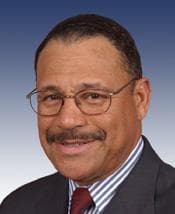
- Sponsored by
- Sanford Bishop
- Cosponsors
- None
- Introduced
- In Committee
What this bill would do
The Protecting Our Produce Act amends the Specialty Crops Competitiveness Act of 2004 to create a pilot program. This program requires the Secretary of Agriculture to provide annual crop loss payments to producers of specific seasonal and perishable crops. Payments are triggered when the effective price of a crop is lower than its reference price due to imports. The program applies to producers of asparagus, bell peppers, blueberries, cucumbers, or squash. It is designed to last for five years and has an authorized annual budget of $200,000,000.
Yes· 3 of 12
Would farmers be better off under this?+7
Provides critical financial support for producers of asparagus, bell peppers, blueberries, cucumbers, and squash.
Would people in rural areas be better off under this?+6
Increases economic support for rural agricultural communities.
Does this invest in rural communities?+6
Directly supports the financial viability of rural producers of specialty crops.
The opposite· 3 of 8
Would high-income households be better off under this?-5
Explicitly excludes producers with an average adjusted gross income of $5 million or more.
Would people with substantial wealth be better off under this?-5
Income caps exclude high net worth individuals from eligibility.
Would the very wealthiest people be better off under this?-5
Income caps exclude high net worth individuals from eligibility.
Who it would affect, and how
Potential Positive Impacts for People
-
Financial Support for Specific Crop Producers: Producers of asparagus, bell pepper, blueberry, cucumber, or squash may receive recovery payments when low prices are caused by imports. This is found in SEC. 501(b)(1).
-
Support for Small to Mid-Sized Farmers: The program limits eligibility to those with an average adjusted gross income of less than $5,000,000, ensuring funds go to those under a certain income threshold. This is found in SEC. 501(c)(2)(A).
-
Targeted Aid for Professional Farmers: By requiring that at least 75 percent of a producer's adjusted gross income comes from farming, ranching, or forestry, the benefit is reserved for those whose primary livelihood is agricultural. This is found in SEC. 501(c)(2)(B).
Potential Negative Impacts for People
-
Limited Crop Eligibility: Only producers of asparagus, bell pepper, blueberry, cucumber, or squash are eligible for the program, meaning producers of other seasonal or perishable crops receive no benefit. This is found in SEC. 501(a)(3).
-
Strict Income and Source Requirements: Producers who earn $5,000,000 or more, or those who derive less than 75 percent of their income from farming, ranching, or forestry, are ineligible for payments. This is found in SEC. 501(c)(2).
-
Temporary Nature of Support: The pilot program is set to terminate five years after the date the Act is enacted, meaning the financial support is not permanent. This is found in SEC. 501(f).
Groups and Interests Ranking
Every group the model scored this bill for, from -10 to +10. Hover a score for the reason it gave.
- Demographic And Interest Groups
- Good For Farmers+7Good For Rural Residents+6Good For Business Owners+5Good For Low Income Households+3Good For Middle Aged+3Good For Middle Class Households+3Good For Seniors+3Good For Billionaires-5Good For High Income Households-5Good For High Net Worth Individuals-5Good For Ultra High Net Worth Individuals-5
- Environment Energy And Infrastructure
- Improves Rural Development+6
- Economy And Finance
- Improves Small Business Support+5Improves Economic Growth+2Reduces Government Spending-2Reduces National Debt-2Improves Fiscal Responsibility-1
- National Security And Foreign Policy
- Improves International Trade-2
- Social Issues And Justice
- Improves Poverty Reduction+2
- Governance And Ideology
- Increases Federal Power+1
- 4/3/2026
- Referred to the Subcommittee on General Farm Commodities, Risk Management, and Credit.
- Referred to the Subcommittee on Nutrition and Foreign Agriculture.
- 3/3/2026
- Referred to the House Committee on Agriculture.
- Introduced in House