Bill · H.R. 7742· House(119-HR-7742)
Keep It Moving Act
- Introduced
- 2/26/2026
- Last activity
- 2/26/2026 — Referred to the House Committee on Energy and Commerce.
- Sponsored by
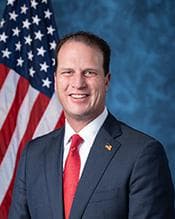
- August Pfluger
- Cosponsors
- - 0 - 1
- Introduced
- In Committee
What this bill would do
The "Keep It Moving Act" aims to amend the Communications Act of 1934 to establish specific time limits for the Federal Communications Commission (FCC) regarding applications for transferring control or assigning licenses. It sets strict deadlines for the Commission to determine if an application is complete and to issue final orders. The bill provides that if the Commission misses its established deadlines, an applicant can seek a court writ to compel approval. Additionally, it addresses specific timelines for requests for additional information and designations for hearings. This legislation is intended to provide more predictability for the application process.
Yes· 3 of 6
Does this protect the right to fair treatment by the courts?+5
The bill enhances due process by providing formal review mechanisms and judicial remedies for FCC administrative actions.
Would business owners be better off under this?+5
Business entities seeking communications licenses benefit from increased predictability and a legal mechanism to combat administrative delays.
Does this make what the government does easier for the public to see?+4
The bill imposes clear, predictable timelines and provides legal recourse for administrative delays, increasing accountability.
The opposite
No question was scored the opposite.
Who it would affect, and how
Potential Positive Impacts for People
-
Increased Predictability and Efficiency: The bill mandates specific deadlines for the Commission to determine if an application is complete (Section 2(a)(1)) and to issue final orders (Section 2(a)(1)(A) and (B)). This prevents applications from being stuck in limbo indefinitely.
-
Accountability for Administrative Delays: If the Commission fails to meet its required deadlines, applicants are entitled to a writ from a United States court to compel the Commission to either approve the application or file a formal complaint to seek permission to deny it (Section 2(a)(5)).
-
Protection Against Unreasonable Determinations: The bill allows for the review of determinations that an application is incomplete. If a determination is found to be unreasonable, the application is deemed complete based on specific calculated dates (Section 2(a)(5)).
-
Streamlined Processes for Minor Transactions: Pro forma transactions, which are considered insubstantial, do not require advance Commission approval, requiring only a written notification after the transaction is completed (Section 2(e)).
Potential Negative Impacts for People
-
Increased Burden of Proof for Denials: If the Commission misses a deadline and a writ is issued, the Commission can only deny an application if it can prove to a court, through clear and convincing evidence, that the approval is not in the public interest (Section 2(a)(5)(B)(ii)).
-
Potential for Rapid Approval Decisions: The bill sets a 180-day deadline for the Commission to issue a final order in many cases (Section 2(a)(1)(A)), which may involve timelines that include a one-year period if the application is referred to a Committee for the Assessment of Foreign Participation (Section 2(a)(1)(B)).
-
Limited Ability to Deny via Delegation: While an order approving an application can be adopted through delegated authority, any order that denies an application or designates it for a hearing must be decided by a majority vote of the Commission members (Section 2(d)).
Groups and Interests Ranking
Every group the model scored this bill for, from -10 to +10. Hover a score for the reason it gave.
- Governance And Ideology
- Improves Due Process+5Improves Government Transparency+4Increases Federal Power+2
- Demographic And Interest Groups
- Good For Business Owners+5
- Economy And Finance
- Improves Consumer Protection+3
- Education And Technology
- Improves Internet Access+2
- 2/26/2026
- Referred to the House Committee on Energy and Commerce.
- 1 Cosponsor added.
- Introduced in House
 Josh Gottheimer
Democrat · New Jersey