Bill · H.R. 7726· House(119-HR-7726)
Stop Child Care Scams Act of 2026
- Introduced
- 2/26/2026
- Last activity
- 6/4/2026 — Received in the Senate and Read twice and referred to the Committee on Health, Education, Labor, and Pensions.
- Sponsored by
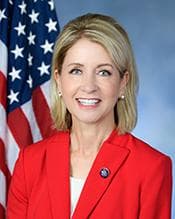
- Mary Miller
- Cosponsors
- None
- Introduced
- Passed House
- In Senate committee
What this bill would do
The Stop Child Care Scams Act of 2026 aims to reduce fraud within the Child Care and Development Block Grant program and the Child and Adult Care Food Program. It mandates that the Secretary permanently debar providers who are found to have committed fraud. States must now include detailed fraud prevention and recovery processes in their plans and face the loss of funds if improper payment rates exceed 5 percent for two consecutive years. The act also establishes periodic performance reviews and removes the authority to waive sanctions. Additionally, it requires a GAO study on fraud prevention measures across federal early childhood and nutrition programs.
Yes· 3 of 9
Does this make the government pay for what it commits to?+7
Implements strict oversight, improper payment thresholds, and mandatory fraud recovery processes.
Does this make what the government does easier for the public to see?+6
Requires detailed state plans and annual reports on improper payments.
Does this give the federal government more power?+5
Increases the Secretary's authority to mandate sanctions and permanently debar providers.
The opposite
Does this leave more decisions to the states?-5
Imposes stricter federal mandates on states and removes the authority to waive sanctions.
Would business owners be better off under this?-3
Legitimate childcare business owners face stricter audits and higher risks of permanent debarment.
Does this make it easier to run a small business?-2
Strict debarment rules and oversight may increase compliance burdens for small child care providers.
What Congress actually voted on
2 recorded votes have been taken on this bill. One of them decided something; the rest moved it along.
- The House: the vote on whether to pass the billPassed 217–207
This is the real decision in this chamber. Passing here sends the bill to the other chamber, which must pass it too before it can go to the President.
06/03/2026 · Roll call 198 · recorded as “On Passage”
Who it would affect, and how
Potential Positive Impacts for People
- Accountability for Providers: The Secretary must permanently debar child care providers who have a final determination of fraud, preventing them from receiving financial assistance (Section 4).
- Increased Oversight: States must describe their internal controls, investigation processes for recovering fraudulent payments, and procedures to verify eligibility (Section 3).
- Payment Accuracy: States with an improper payment rate over 5 percent must submit a corrective action plan to reduce that rate (Section 5).
- Performance Monitoring: The Secretary will conduct a comprehensive review of State performance every three years to identify and provide additional monitoring for high-risk States (Section 6).
- Evidence-Based Improvements: The GAO will study the effectiveness of fraud prevention and provide recommendations to improve early childhood education and nutrition programs (Section 9).
Potential Negative Impacts for People
- Loss of State Funding: States that fail to reduce their improper payment rate to 5 percent or more for two consecutive years may become ineligible to receive funds (Section 5).
- Strict Penalties: The act eliminates the authority to waive sanctions imposed upon a State (Section 8).
- Program Restrictions: Child care providers found to have committed fraud in one program, such as the Child and Adult Care Food Program, are automatically permanently debarred from others, like the Child Care and Development Block Grant program (Section 4 and Section 7).
Groups and Interests Ranking
Every group the model scored this bill for, from -10 to +10. Hover a score for the reason it gave.
- Economy And Finance
- Improves Fiscal Responsibility+7Improves Consumer Protection+3Reduces National Debt+2Reduces Government Spending+1Improves Small Business Support-2
- Demographic And Interest Groups
- Good For Children+4Good For Low Income Households+3Good For Women+2Good For Business Owners-3
- Governance And Ideology
- Improves Government Transparency+6Increases Federal Power+5Increase States Rights-5
| Updated | Bill | Title | Policy Area |
|---|---|---|---|
| 4 months ago | On agreeing to the Rules amendment (A001) Agreed to without objection. |
- 6/4/2026
- Received in the Senate and Read twice and referred to the Committee on Health, Education, Labor, and Pensions.
- 6/3/2026
- Motion to reconsider laid on the table Agreed to without objection.
- Passed/agreed to in House: On passage Passed by the Yeas and Nays: 217 - 207 (Roll no. 198). (text of amendment in the nature of a substitute: CR H3796-3797)
- On passage Passed by the Yeas and Nays: 217 - 207 (Roll no. 198). (text of amendment in the nature of a substitute: CR H3796-3797)
- On motion to recommit Failed by the Yeas and Nays: 210 - 213 (Roll no. 197).
- Considered as unfinished business. (consideration: CR H3811-3812)
- POSTPONED PROCEEDINGS - At the conclusion of debate on H.R. 7726, the Chair put the question on motion to recommit and by voice vote, announced the noes had prevailed. Mr. Subramanyam demanded the yeas and nays and the Chair postponed further proceedings until a time to be announced.
- The previous question on the motion to recommit was ordered pursuant to clause 2(b) of rule XIX.
- Mr. Subramanyam moved to recommit to the Committee on Education and Workforce. (text: CR H3805)
- The previous question was ordered pursuant to the rule.
- DEBATE - The House proceeded with one hour of debate on H.R. 7726.
- Rule provides for consideration of H.R. 8646, H.R. 7726, H.R. 7892 and H.R. 8872. The resolution provides for consideration of H.R. 8646 under a structured rule and H.R. 7726, H.R. 7892, and H.R. 8872 under a closed rule, with one hour of general debate on each bill. The resolution provides for one motion to recommit on each bill.
- Considered under the provisions of rule H. Res. 1333. (consideration: CR H3796-3805)
- Rules Committee Resolution H. Res. 1333 Reported to House. Rule provides for consideration of H.R. 8646, H.R. 7726, H.R. 7892 and H.R. 8872. The resolution provides for consideration of H.R. 8646 under a structured rule and H.R. 7726, H.R. 7892, and H.R. 8872 under a closed rule, with one hour of general debate on each bill. The resolution provides for one motion to recommit on each bill.
- 4/6/2026
- Reported (Amended) by the Committee on Education and Workforce. H. Rept. 119-592.
- Placed on the Union Calendar, Calendar No. 512.
- 3/5/2026
- Committee Consideration and Mark-up Session Held
- Ordered to be Reported (Amended) by the Yeas and Nays: 20 - 15.
- 2/26/2026
- Referred to the House Committee on Education and Workforce.
- Introduced in House
2 bills Congress.gov lists as related to this one — companions in the other chamber, earlier versions, and bills this one absorbed or was folded into.
- 119-S-4788: Stop Child Care Scams Act of 2026
- 119-HRES-1333: Providing for consideration of the bill (H.R. 8646) making appropriations for Agriculture, Rural Development, Food and Drug Administration, and Related Agencies programs for the fiscal year ending September 30, 2027, and for other purposes; providing for consideration of the bill (H.R. 7726) to amend the Child Care and Development Block Grant Act of 1990 to withhold funds from noncompliant States under such Act; providing for consideration of the bill (H.R. 7892) to amend the Higher Education Act of 1965 to require to the Secretary of Education to use an identity fraud detection system to review each FAFSA to determine whether the FAFSA presents a reasonable suspicion of identity fraud; and providing for consideration of the bill (H.R. 8872) to amend part A of title IV of the Social Security Act to target funds to low-income families, strengthen program integrity guardrails for State expenditure of funds, require measurement of improper payments, and establish goals for eliminating fraud and improper payments under the program of block grants to States for temporary assistance for needy families, and for other purposes.