Bill · H.R. 7705· House(119-HR-7705)
Tribal Tax and Investment Reform Act of 2026
- Introduced
- 2/25/2026
- Last activity
- 2/25/2026 — Referred to the Committee on Ways and Means, and in addition to the Committee on Education and Workforce, for a period to be subsequently determined by the Speaker, in each case for consideration of such provisions as fall within the jurisdiction of the committee concerned.
- Sponsored by
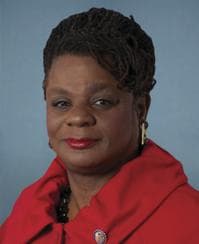
- Gwen Moore
- Cosponsors
- - 7 - 7
- Introduced
- In Committee
What this bill would do
The Tribal Tax and Investment Reform Act of 2026 aims to amend the Internal Revenue Code of 1986 to treat Indian Tribal Governments similarly to State governments for specific tax purposes. The bill seeks to provide tax parity to address historic disadvantages in accessing capital for infrastructure and economic development. It includes provisions for tax-exempt bonds, pension plan protections, and new markets tax credits for tribal areas. Additionally, the legislation modifies treatments for tribal foundations, general welfare benefits, and employment tax credits. The bill also addresses exclusions for specific Indian health service loan repayments and scholarship programs.
Yes· 3 of 18
Would Native Americans be better off under this?+9
The bill significantly enhances the economic, legal, and financial standing of Indian Tribal Governments and their citizens.
Does this narrow racial gaps in how people are treated?+7
The bill addresses historic economic disadvantages faced by Indian Tribes through tax parity and increased investment opportunities.
Is this likely to grow the economy?+6
By providing access to capital through tax-exempt bonds and new markets tax credits, the bill stimulates economic growth in tribal communities.
The opposite
No question was scored the opposite.
Who it would affect, and how
Potential Positive Impacts for People
-
Increased access to capital via tax-exempt bonds: This provision allows Tribal Governments to finance projects with government bonds, which helps build community infrastructure and develop economies (Section 3).
-
Enhanced protections for pension and employee benefit plans: Tribal pension plans would be subject to uniform protections and fiduciary standards, including personal liability for fiduciaries who breach their duties (Section 4).
-
Increased investment in tribal areas through tax credits: A new markets tax credit for tribal area investments is established to provide capital for qualified tribal community businesses (Section 6).
-
Clarification of general welfare and trust programs: This amendment clarifies how certain Indian general welfare benefits and grantor trusts are treated in relation to resource exclusions (Section 8).
-
Support for Indian employment: The bill modifies the Indian employment tax credit by increasing the limitation from $20,000 to $30,000 (Section 9).
-
Tax exclusions for health-related payments: Certain amounts received under the Indian Health Professions Scholarships Program and payments under the Indian Health Service loan repayment program are excluded from gross income (Section 10 and Section 11).
Potential Negative Impacts for People
-
Restrictions on bond use for gaming: Proceeds from certain tax-exempt bonds issued by Indian Tribal Governments cannot be used to finance buildings used for class II or class III gaming (Section 3).
-
Restrictions on bond use for specific commercial entities: Alaska Native Intertribal Consortium tax-exempt bonds cannot be used for certain facilities such as private or commercial golf courses, country clubs, or stores where the principal business is the sale of alcoholic beverages for off-premises consumption (Section 3).
-
Limitations on bond duration: The term "tribal economic development bond" excludes any bond issued after December 31, 2029 (Section 3).
Groups and Interests Ranking
Every group the model scored this bill for, from -10 to +10. Hover a score for the reason it gave.
- Demographic And Interest Groups
- Good For Native Americans+9Good For Business Owners+5Good For Low Income Households+5Good For Rural Residents+5Good For Retirees+4Good For Seniors+4Good For Students+4
- Social Issues And Justice
- Improves Racial Equity+7Improves Poverty Reduction+5Improves Affordable Housing+4
- Economy And Finance
- Improves Economic Growth+6Increases Job Creation+5Improves Small Business Support+4
- Environment Energy And Infrastructure
- Improves Roads And Bridges+5Improves Rural Development+5
- Governance And Ideology
- Increase States Rights+5
- Healthcare
- Improves Healthcare Access+5
- Education And Technology
- Improves Student Loan Relief+3
- 8/3/2026
- 2 Cosponsors added.
- 7/14/2026
- 2 Cosponsors added.
- 3/4/2026
- 1 Cosponsor added.
- 2/25/2026
- Referred to the Committee on Ways and Means, and in addition to the Committee on Education and Workforce, for a period to be subsequently determined by the Speaker, in each case for consideration of such provisions as fall within the jurisdiction of the committee concerned.
- 9 Cosponsors added.
- Introduced in House
 Ken Calvert
Republican · California
 Tom Cole
Republican · Oklahoma
 Judy Chu
Democrat · California
 Danny Davis
Democrat · Illinois
 Suzan DelBene
Democrat · Washington
 Sharice Davids
Democrat · Kansas
 Vince Fong
Republican · California
 Jared Huffman
Democrat · California
 John Moolenaar
Republican · Michigan
 Jimmy Panetta
Democrat · California
 David Schweikert
Republican · Arizona
 Mike Thompson
Democrat · California
 David Valadao
Republican · California
 Rudy Yakym
Republican · Indiana