Bill · H.R. 7696· House(119-HR-7696)
AI Cyber Grid Protection Resilient Development Act of 2026
- Introduced
- 2/25/2026
- Last activity
- 2/26/2026 — Referred to the Subcommittee on Cybersecurity and Infrastructure Protection.
- Sponsored by
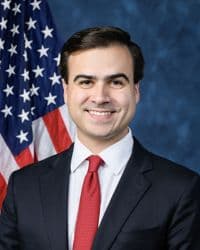
- Pablo Hernández
- Cosponsors
- - 2 - 0
- Introduced
- In Committee
What this bill would do
This bill, known as the ``AI Cyber Grid Protection Resilient Development Act of 2026'', aims to create a grant program to defend our infrastructure. It directs the Director of the Cybersecurity and Infrastructure Security Agency and the Secretary of Homeland Security to establish awards for specific entities. These funds will help develop secure artificial intelligence (AI) cyber-physical testbeds. The purpose of these testbeds is to simulate grid-scale cyberattacks and provide safe training for AI models. The program is intended to run through fiscal years 2026 through 2030.
Yes· 3 of 8
Does this better protect the country from computer attacks?+8
The bill funds the development of secure AI testbeds to simulate and mitigate grid-scale cyberattacks.
Does this put more money into scientific research?+7
The bill authorizes $100,000,000 to fund research into AI cyber-physical testbeds and grid security.
Would Hispanic Americans be better off under this?+4
The bill explicitly includes Hispanic-serving institutions as eligible entities for the new grant program.
The opposite
No question was scored the opposite.
Who it would affect, and how
Potential Positive Impacts for People
-
Development of Secure Infrastructure: The creation of AI cyber-physical testbeds can be used to simulate grid-scale cyberattacks and train AI models safely (Section 2(a)).
-
Regular Oversight and Information Sharing: The Director of the Cybersecurity and Infrastructure Security Agency and the Secretary of Homeland Security must submit annual reports to Congress detailing evolving threats and progress in AI mitigation (Section 2(b)).
-
Support for Educational and Scientific Institutions: The bill provides a pathway for institutions of higher education, such as public colleges, community colleges, and Hispanic-serving institutions, as well as National Laboratories, to receive awards (Section 2(a), Section 2(d)).
Potential Negative Impacts for People
- No specific negative impacts or burdens are explicitly mentioned in the provided text.
Groups and Interests Ranking
Every group the model scored this bill for, from -10 to +10. Hover a score for the reason it gave.
- Education And Technology
- Increases Scientific Research Funding+7Increases Public School Funding+3
- Demographic And Interest Groups
- Good For Hispanic Americans+4Good For Students+3Good For Low Income Households+2
- National Security And Foreign Policy
- Improves Cybersecurity Defense+8
- Social Issues And Justice
- Improves Racial Equity+3
- Environment Energy And Infrastructure
- Improves Public Transit+2
- 2/26/2026
- Referred to the Subcommittee on Cybersecurity and Infrastructure Protection.
- 2/25/2026
- Referred to the House Committee on Homeland Security.
- 2 Cosponsors added.
- Introduced in House
 Adelita Grijalva
Democrat · Arizona
 Sam Liccardo
Democrat · California