Bill · H.R. 7695· House(119-HR-7695)
To provide that the final rule titled "Special Areas; Roadless Area Conservation" and issued on January 12, 2001 (66 Fed. Reg. 3244) shall have no force or effect and require the Secretary of Agriculture to construct certain roads on National Forest System lands, and for other purposes.
- Introduced
- 2/25/2026
- Last activity
- 5/21/2026 — Subcommittee Hearings Held
- Sponsored by
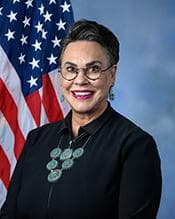
- Harriet Hageman
- Cosponsors
- - 4 - 0
- Introduced
- In Committee
What this bill would do
This bill aims to nullify the 2001 "Special Areas; Roadless Area Conservation" rule. It prohibits the Secretary of Agriculture from enforcing or implementing any rule substantially similar to that rule. Instead, the bill requires the Secretary of Agriculture, through the Chief of the Forest Service, to construct permanent and temporary roads on National Forest System lands. These roads are to be built for specific purposes such as restoration, hazardous fuels reduction, or replacing existing roads. All construction must still follow applicable environmental requirements like the National Environmental Policy Act of 1969.
Yes· 3 of 7
Does this better protect public land such as parks and forests?+5
The bill directs the Forest Service to build infrastructure specifically for forest health and restoration.
Does this repair or build roads and bridges?+4
The bill mandates the construction of roads for forest restoration and hazardous fuels reduction.
Would people in rural areas be better off under this?+4
Increased road construction and forest management can provide economic and safety benefits to rural residents.
The opposite
Does this better protect air, water and wildlife?-5
The bill removes the 'Roadless Area Conservation' rule which is a key environmental protection measure.
Does this cut the pollution that drives climate change?-3
The nullification of roadless protections and increased road construction may lead to increased habitat fragmentation and carbon release.
Would Native Americans be better off under this?-3
The removal of roadless protections may negatively impact traditional lands and resources often held by indigenous communities.
Who it would affect, and how
Potential Positive Impacts for People
-
Hazardous fuels reduction: The bill allows for the construction of roads to carry out activities meant to reduce hazardous fuels in at-risk communities, the wildland-urban interface, or a municipal watershed (Section 1(b)(2)).
-
Forest health and restoration: Roads may be constructed to carry out restoration activities of the Forest Service (Section 1(b)(1)).
-
Road replacement: The Secretary can build roads to replace or decommission existing permanent roads that are negatively affecting the health of a forest, rangeland, or a watershed (Section 1(b)(3)).
Potential Negative Impacts for People
-
Nullification of existing protections: The bill removes the force and effect of the "Special Areas; Roadless Area Conservation" rule issued on January 12, 2001 (Section 1(a)(1)).
-
Prohibition of similar rules: The Secretary of Agriculture is prohibited from taking action to propose, finalize, implement, administer, or enforce any rule that is substantially similar to the nullified roadless rule (Section 1(a)(2)).
Groups and Interests Ranking
Every group the model scored this bill for, from -10 to +10. Hover a score for the reason it gave.
- Environment Energy And Infrastructure
- Improves Public Land Management+5Improves Roads And Bridges+4Improves Disaster Relief And F E M A+3Improves Rural Development+3Improves Environmental Protections-5Reduces Carbon Emissions-3
- Demographic And Interest Groups
- Good For Rural Residents+4Good For Urban Residents+1Good For Native Americans-3
- Governance And Ideology
- Increases Federal Power+2
- 5/21/2026
- Subcommittee Hearings Held
- 5/12/2026
- Referred to the Subcommittee on Federal Lands.
- 4/3/2026
- Referred to the Subcommittee on Forestry and Horticulture.
- 2/25/2026
- Referred to the Committee on Agriculture, and in addition to the Committee on Natural Resources, for a period to be subsequently determined by the Speaker, in each case for consideration of such provisions as fall within the jurisdiction of the committee concerned.
- 4 Cosponsors added.
- Introduced in House
 Troy Downing
Republican · Montana
 Celeste Maloy
Republican · Utah
 Pete Stauber
Republican · Minnesota
 Thomas Tiffany
Republican · Wisconsin