Bill · H.R. 7648· House(119-HR-7648)
Local Taxpayer Protection Act of 2026
- Introduced
- 2/23/2026
- Last activity
- 2/23/2026 — Referred to the Committee on the Judiciary, and in addition to the Committees on Energy and Commerce, and Transportation and Infrastructure, for a period to be subsequently determined by the Speaker, in each case for consideration of such provisions as fall within the jurisdiction of the committee concerned.
- Sponsored by
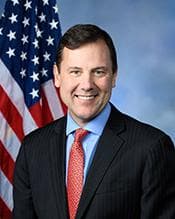
- Thomas Kean
- Cosponsors
- None
- Introduced
- In Committee
What this bill would do
This bill, titled the "Local Taxpayer Protection Act of 2026," aims to create a grant program managed by the Secretary of Homeland Security. The program is designed to assist municipalities that maintain or are developing facilities for processing or detaining individuals arrested or detained by U.S. Immigration and Customs Enforcement. Grants are intended to mitigate expenses related to unrealized property tax revenue and the use of public utilities. Municipalities can apply for these grants for a five-year term, with the option to apply for renewals. The funds are meant to help defray specific local costs associated with these federal facilities.
Yes· 3 of 7
Does this give the federal government more power?+2
The bill empowers the Secretary of Homeland Security to manage a new grant program that distributes funds to local municipalities.
Does this tighten control of the border?+2
The bill supports the infrastructure and financial stability of municipalities hosting ICE processing and detention facilities.
Does this cut taxes for middle-income families?+2
The bill provides grants to municipalities to defray unrealized property tax revenue caused by ICE facilities, which may stabilize local tax burdens.
The opposite
Does this reduce what the federal government spends?-1
The bill establishes a new federal grant program that requires government spending to assist municipalities.
Does this improve buses, trains and other public transport?-1
The bill focuses utility funds on ICE facility needs rather than general public transit infrastructure.
Who it would affect, and how
Potential Positive Impacts for People
-
Financial relief for municipalities: The grant program provides funds to help municipalities cover the combined cost of unrealized property tax revenue and public utilities used by ICE facilities (Section 2(b)).
-
Utility system improvements: Grants can be used to extend the capacity of public utilities systems to accommodate the use of such systems by these facilities (Section 2(f)).
-
Clarified utility coverage: The bill defines "public utilities systems" broadly to include water, gas, natural gas, electricity, internet connectivity, garbage collection, recycling, and sewer systems (Section 2(g)).
-
Flexibility in application: Entities have the option to submit joint or regional applications to achieve greater cost effectiveness and regional efficiency (Section 2(e)(3)).
Potential Negative Impacts for People
-
Requirement for municipal self-sufficiency: Grantees are directed to make the ICE facility self-sufficient regarding the use of public utilities to the extent practicable (Section 2(f)).
-
Burden of application proof: Municipalities must provide a description of financial need and an analysis of costs and benefits to receive a grant (Section 2(e)(2)).
Groups and Interests Ranking
Every group the model scored this bill for, from -10 to +10. Hover a score for the reason it gave.
- Demographic And Interest Groups
- Good For Low Income Households+1Good For Middle Class Households+1Good For Urban Residents+1
- Governance And Ideology
- Increases Federal Power+2
- Social Issues And Justice
- Improves Border Security+2
- Economy And Finance
- Reduces Middle Class Taxes+2Reduces Government Spending-1
- Education And Technology
- Improves Internet Access+1
- Environment Energy And Infrastructure
- Improves Public Transit-1
- 2/23/2026
- Referred to the Committee on the Judiciary, and in addition to the Committees on Energy and Commerce, and Transportation and Infrastructure, for a period to be subsequently determined by the Speaker, in each case for consideration of such provisions as fall within the jurisdiction of the committee concerned.
- Introduced in House