Bill · H.R. 7636· House(119-HR-7636)
To amend the Internal Revenue Code of 1986 to establish the individual tariff refund credit.
- Introduced
- 2/20/2026
- Last activity
- 2/20/2026 — Referred to the House Committee on Ways and Means.
- Sponsored by
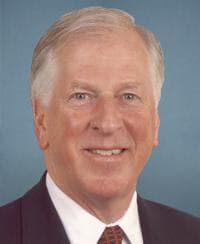
- Mike Thompson
- Cosponsors
- - 2 - 0
- Introduced
- In Committee
What this bill would do
This bill seeks to amend the Internal Revenue Code to create an individual tariff refund credit. This credit is triggered when a final court order requires the Federal Government to repay tariff revenues that were collected from unlawfully imposed tariffs. The credit is distributed to eligible individuals based on their household size. The bill also establishes an excise tax on certain tariff refunds received by specific taxpayers.
Yes· 3 of 9
Does this raise the taxes companies pay?+7
The bill imposes a 100 percent excise tax on certain large corporate tariff refunds.
Does this cut taxes for middle-income families?+5
The bill provides a tax credit for eligible individuals based on household size to refund tariff revenues.
Would households on low incomes be better off under this?+3
The bill provides household-size-based tax credits which can benefit families with more dependents.
The opposite
Would business owners be better off under this?-4
Large business owners may face a 100 percent excise tax on certain tariff refunds.
Does this reduce what the federal government spends?-3
The bill requires the government to pay out significant tariff refunds to individuals and U.s. possessions.
Who it would affect, and how
Potential Positive Impacts for People
-
Tax Credits for Eligible Individuals: Eligible individuals can receive a credit against their taxes equal to an applicable tariff refund amount, which is calculated based on the number of people in their household (Section 6436(a), (g)).
-
Rapid Refund Processing: The Secretary is directed to refund or credit overpayments as rapidly as possible (Section 6436(i)(2)).
-
Support for U.S. Possessions: The Secretary of the Treasury shall pay amounts to U.S. possessions to cover losses or provide estimated benefits to their residents due to these amendments (Section 1(c)(1), (2)).
-
Administrative Expense Coverage: Possessions receiving payments can also receive amounts to cover certain increased administrative expenses (Section 1(c)(3)).
Potential Negative Impacts for People
-
Exclusions from Credit: Certain groups, such as nonresident alien individuals, specific types of estates or trusts, and individuals whose deductions are allowable to another taxpayer, are not considered "eligible individuals" for the credit (Section 6436(c)).
-
No Interest on Overpayments: No interest will be allowed on any overpayments resulting from the advanced payment of this credit (Section 6436(i)(3)).
-
Excise Tax on Certain Taxpayers: A 100 percent excise tax is imposed on "non-qualifying tariff refunds" received by certain large corporations or taxpayers, unless they can prove their price increases did not exceed a specific threshold (Section 2(a)).
Groups and Interests Ranking
Every group the model scored this bill for, from -10 to +10. Hover a score for the reason it gave.
- Economy And Finance
- Increases Corporate Taxes+7Reduces Middle Class Taxes+5Improves Small Business Support+2Reduces Government Spending-3
- Demographic And Interest Groups
- Good For Low Income Households+3Good For Middle Class Households+3Good For High Income Households+1Good For Urban Residents+1Good For Business Owners-4
- Social Issues And Justice
- Improves Poverty Reduction+2
- Governance And Ideology
- Improves Government Transparency+1
- 9/3/2026
- 1 Cosponsor added.
- 8/13/2026
- 1 Cosponsor added.
- 2/20/2026
- Referred to the House Committee on Ways and Means.
- Introduced in House
 Greg Casar
Democrat · Texas
 Hillary Scholten
Democrat · Michigan