Bill · H.R. 7609· House(119-HR-7609)
Rural Development Modernization Act
- Introduced
- 2/20/2026
- Last activity
- 2/20/2026 — Referred to the Committee on Agriculture, and in addition to the Committees on Energy and Commerce, Natural Resources, and Financial Services, for a period to be subsequently determined by the Speaker, in each case for consideration of such provisions as fall within the jurisdiction of the committee concerned.
- Sponsored by
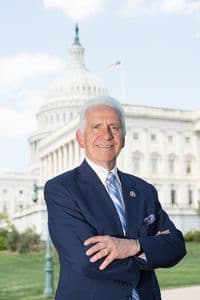
- Jim Costa
- Cosponsors
- - 2 - 2
- Introduced
- In Committee
What this bill would do
This bill, titled the "Rural Development Modernization Act," aims to harmonize population thresholds used to define rural communities across various federal programs. It primarily increases the population threshold for several Department of Agriculture programs, such as broadband, telephone service loans, and water assistance, to 25,000 inhabitants. The legislation also updates definitions for rural housing and water supply projects. Additionally, it clarifies the inclusion of United States territories and certain associated states in various programs. Finally, it mandates an annual reassessment of these population thresholds by the Secretary of Agriculture.
Yes· 3 of 5
Would people in rural areas be better off under this?+6
The bill specifically expands the eligibility for broadband, water, and housing programs to larger rural communities.
Does this make health care easier to get in general?+5
By raising the population threshold, more communities can qualify for telemedicine and distance learning resources.
Does this make housing cost less?+5
The bill increases the population threshold for rural housing programs, potentially expanding eligibility to more communities.
The opposite
No question was scored the opposite.
Who it would affect, and how
Potential Positive Impacts for People
-
Increased access to community services: By raising the population threshold to 25,000 inhabitants for various programs, more communities may qualify for benefits such as broadband, telemedicine, distance learning (Section 2(a)(1)), telephone service loans (Section 2(a)(2)), and water, wastewater, and essential community facilities loans (Section 2(a)(3)).
-
Improved water assistance: The bill increases thresholds for emergency and imminent community water assistance grants (Section 2(a)(4)), which could assist more communities in meeting their water needs.
-
Enhanced rural housing support: The act amends the Housing Act of 1949 to increase population thresholds for rural housing (Section 2(a)(5)), potentially allowing more people to qualify for these programs.
-
Broader inclusion for territories and associated states: The bill clarifies that communities in United States territories and possessions are included in broadband, telemedicine, and distance learning programs (Section 5(a)(1)), and it includes the Northern Mariana Islands in rural cooperative development grants (Section 5(c)).
-
Updated status for specific regions: The bill updates the language regarding the Republic of the Marshall Islands, the Federated States of Micronesia, and the Republic of Palau in relation to the Consolidated Farm and Rural Development Act (Section 5(d)).
Potential Negative Impacts for People
- No specific negative impacts are explicitly detailed in the text provided.
Groups and Interests Ranking
Every group the model scored this bill for, from -10 to +10. Hover a score for the reason it gave.
- Demographic And Interest Groups
- Good For Rural Residents+6Good For Low Income Households+4
- Healthcare
- Improves Healthcare Access+5
- Social Issues And Justice
- Improves Affordable Housing+5
- Economy And Finance
- Improves Small Business Support+4
- 7/21/2026
- 1 Cosponsor added.
- 2/20/2026
- Referred to the Committee on Agriculture, and in addition to the Committees on Energy and Commerce, Natural Resources, and Financial Services, for a period to be subsequently determined by the Speaker, in each case for consideration of such provisions as fall within the jurisdiction of the committee concerned.
- 3 Cosponsors added.
- Introduced in House
 Eric Crawford
Republican · Arkansas
 Donald Davis
Democrat · North Carolina
 Josh Riley
Democrat · New York
 David Valadao
Republican · California