Bill · H.R. 7510· House(119-HR-7510)
Preventing Research Ownership Transfer to External Competitive Threats (PROTECT) Act of 2026
- Introduced
- 2/11/2026
- Last activity
- 2/11/2026 — Referred to the House Committee on Education and Workforce.
- Sponsored by
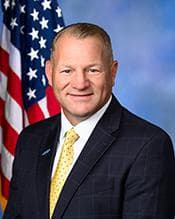
- Troy Nehls
- Cosponsors
- - 1 - 0
- Introduced
- In Committee
What this bill would do
The ``Preventing Research Ownership Transfer to External Competitive Threats (PROTECT) Act of 2026'' aims to stop certain foreign governments from getting intellectual property from U.S. universities. It prohibits universities, faculty, staff, or students from transferring research rights to "covered foreign governments." These prohibited nations include countries like Russia, China, and Iran, as well as nations in conflict with the U.S. or those supporting terrorist organizations. The Act establishes strict penalties for those who violate these rules. Violations can lead to large civil fines or the seizure of funds. Finally, the Secretary of State holds significant authority in making determinations regarding these threats.
Yes
Does this make patent and copyright rules fairer?+5
The bill ensures that intellectual property developed through university research remains under the control of the institution rather than being transferred to prohibited foreign entities.
Does this better protect the country from computer attacks?+3
The bill protects sensitive research related to critical energy or defense issues from foreign acquisition.
Would business owners be better off under this?+3
The bill protects the proprietary value of research developed within domestic institutions.
The opposite
Does this protect the right to fair treatment by the courts?-5
The bill limits judicial review of the Secretary of State's determinations, except for specific constitutional claims.
Would students be better off under this?-3
Students affiliated with universities may face institutional financial risks or research limitations due to the strict penalty and seizure provisions.
Does this make what the government does easier for the public to see?-2
The bill grants the Secretary of State final authority over determinations that are largely shielded from judicial review.
Who it would affect, and how
Potential Positive Impacts for People
-
Protection of Research Ownership: The bill prohibits United States universities and their affiliates from entering into transactions that grant intellectual property rights of covered research to covered foreign governments (Section 3(a)). This ensures that research, inventions, and discoveries developed within U.S. institutions remain under their control rather than being transferred to specific foreign entities (Section 2(2)).
-
National Security Safeguards: The Act aims to prevent the transfer of intellectual property to nations that pose a threat to the national security of the United States (Section 4(7)). By limiting these transfers, the bill seeks to protect information related to critical energy or defense issues (Section 5(b)).
Potential Negative Impacts for People
-
Financial Burdens on Universities: Universities that violate the prohibition face significant civil penalties. A violation that does not endanger national security can result in a fine of up to $500,000, while a violation that may affect national security can result in a fine of up to $5,000,000 (Section 5(a) and 5(b)).
-
Loss of Research Funds: In the event of a violation, any funds or consideration received by a university in exchange for intellectual property rights in covered research are subject to seizure and forfeiture to the United States Government (Section 5(c)).
-
Limited Legal Recourse: The Secretary of State has the authority to make many of the required determinations, and these decisions are final and not subject to judicial review, except for claims regarding constitutional rights (Section 6(a) and 6(b)).
Groups and Interests Ranking
Every group the model scored this bill for, from -10 to +10. Hover a score for the reason it gave.
- Governance And Ideology
- Improves Due Process-5Improves Government Transparency-2
- Education And Technology
- Improves Intellectual Property Fairness+5
- National Security And Foreign Policy
- Improves Cybersecurity Defense+3
- Demographic And Interest Groups
- Good For Business Owners+3Good For Students-3
- 2/11/2026
- Referred to the House Committee on Education and Workforce.
- 1 Cosponsor added.
- Introduced in House
 Brandon Gill
Republican · Texas