Bill · H.R. 7419· House(119-HR-7419)
Foster Care Stabilization Act of 2026
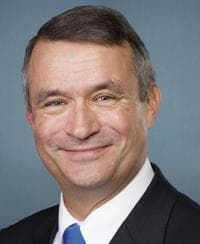
- Introduced
- 2/9/2026
- Last activity
- 2/9/2026 — Referred to the House Committee on Ways and Means.
- Sponsored by
- Don Bacon
- Cosponsors
- - 1 - 2
- Introduced
- In Committee
What this bill would do
The Foster Care Stabilization Act of 2026 aims to amend title IV of the Social Security Act. It establishes a demonstration grant program to provide emergency relief to foster youth. These grants are intended for foster care stabilization agencies to improve pre-placement services. The Secretary will award three grants of up to $1,000,000 each. Agencies have three years to spend the awarded funds before returning any remaining money.
Yes· 3 of 8
Would children be better off under this?+5
The bill provides direct emergency relief, food, and clothing for foster youth.
Would Native Americans be better off under this?+5
The bill mandates special dissemination efforts to ensure Indian Tribes and Native Hawaiian organizations can access grant opportunities.
Would people in their twenties and thirties be better off under this?+4
The bill supports foster youth up to the age of 26 through improved pre-placement services and emergency relief.
The opposite
Does this reduce what the federal government spends?-1
The bill authorizes the expenditure of up to $3,000,000 in new demonstration grants.
Who it would affect, and how
Potential Positive Impacts for People
-
Emergency Relief and Service Improvement: Foster care stabilization agencies can use funds to provide emergency relief and improve services for youth waiting for placement (Section 2, subsection (d)(1)).
-
Employment Opportunities: Funds may be used for the hiring of personnel needed to provide assistance and ensure resources reach foster youth (Section s 2, subsection (d)(5)(A)).
-
Personal Necessities: The bill allows for the provision of clothing and other personal necessities for a total not exceeding $250 per foster youth, per year (Section 2, subsection (d)(5)(B)).
-
Food Security: Grants can be used to purchase food and equipment necessary for preparing food for foster youth (Section 2, subsection (d)(5)(C)).
-
Safety and Support: Funds can provide service and support to prevent and respond to child abuse and neglect, as well as other assistance to promote safety and self-sufficiency (Section 2, subsection (d)(5)(D) and (E)).
-
Targeted Outreach: The Secretary will make special dissemination efforts for grant applications to rural areas, Indian Tribes, Tribal organizations, and Native Hawaiian organizations (Section 2, subsection (d)(4)).
Potential Negative Impacts for People
-
Financial Limits on Necessities: There is a cap of $250 per foster youth, per year, for the provision of clothing and other personal necessities (Section 2, subsection (d)(5)(B)).
-
Time Constraints on Funding: Agencies that receive a grant must spend the funds within 3 years or return any unused amounts to the Secretary (Section 2, subsection (d)(2)).
Groups and Interests Ranking
Every group the model scored this bill for, from -10 to +10. Hover a score for the reason it gave.
- Demographic And Interest Groups
- Good For Children+5Good For Native Americans+5Good For Low Income Households+4Good For Young Adults+4Good For Rural Residents+3
- Social Issues And Justice
- Improves Racial Equity+4Improves Poverty Reduction+3
- Economy And Finance
- Increases Job Creation+3Reduces Government Spending-1
- 2/9/2026
- Referred to the House Committee on Ways and Means.
- 3 Cosponsors added.
- Introduced in House
One bill Congress.gov lists as related to this one — companions in the other chamber, earlier versions, and bills this one absorbed or was folded into.
 Gwen Moore
Democrat · Wisconsin
 Zachary Nunn
Republican · Iowa
 Mary Gay Scanlon
Democrat · Pennsylvania