Bill · H.R. 7405· House(119-HR-7405)
Rail and Highway Transmission Planning Act
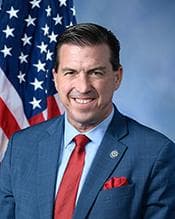
- Introduced
- 2/5/2026
- Last activity
- 2/5/2026 — Referred to the House Committee on Energy and Commerce.
- Sponsored by
- Kevin Mullin
- Cosponsors
- - 3 - 0
- Introduced
- In Committee
What this bill would do
The Rail and Highway Transmission Planning Act directs the Secretary of Energy to conduct a study on using highway and rail rights-of-way for high-voltage transmission infrastructure. This study aims to identify opportunities to co-locate these projects within existing transportation corridors. The goal is to accelerate the development of infrastructure to alleviate energy capacity constraints. It also seeks to deliver more affordable and reliable electricity to consumers. The Secretary will evaluate technical feasibility, costs, benefits, and potential challenges. A final report must be submitted to Congress within three years.
Yes· 3 of 9
Would households on low incomes be better off under this?+2
The bill's purpose includes delivering more affordable electricity to consumers.
Would middle-income households be better off under this?+2
The bill aims to lower energy costs for consumers through improved transmission infrastructure.
Does this make what the government does easier for the public to see?+2
The bill requires the Secretary to publish study results and data on a publicly accessible website.
The opposite
Does this better protect air, water and wildlife?-1
The study must specifically evaluate the potential negative effects of construction on the environment.
Who it would affect, and how
Potential Positive Impacts for People
-
Lower Electricity Costs: The act aims to deliver more affordable electricity for consumers by alleviating energy capacity constraints through new infrastructure (Section 2(b)).
-
Improved Grid Reliability: The study will analyze how building on these rights-of-way can support improvements in grid reliability and increase energy transmission capacity (Section 3(b)(5)(E)).
-
Financial Benefits for Stakeholders: The study is tasked with identifying potential financial benefits for stakeholders, including owners of property abutting the right-of-way (Section 3(b)(5)(D)(ii)).
-
Efficiency and Cost Savings: The study will determine expected cost and time savings regarding land acquisition or obtaining required permits (Section 3(b)(5)(C)).
Potential Negative Impacts for People
-
Safety and Operational Risks: The study must evaluate potential safety or operational interference that could occur while performing maintenance, rehabilitation, or expansion of transportation infrastructure (Section 3(b)(6)(B)).
-
Rail Safety and Communication Issues: There is a potential for electromagnetic interference with rail safety, signaling equipment, and communication equipment (Section 3(b)(6)(A)).
-
Environmental and Community Effects: The Secretary is required to evaluate the effects that constructing and operating high-voltage transmission lines may have on the environment and communities near the right-of-way (Section 3(b)(6)).
Groups and Interests Ranking
Every group the model scored this bill for, from -10 to +10. Hover a score for the reason it gave.
- Demographic And Interest Groups
- Good For Low Income Households+2Good For Middle Class Households+2Good For Rural Residents+1Good For Urban Residents+1
- Governance And Ideology
- Improves Government Transparency+2
- Economy And Finance
- Improves Small Business Support+1
- Environment Energy And Infrastructure
- Improves Roads And Bridges+1Reduces Carbon Emissions+1Improves Environmental Protections-1
- Social Issues And Justice
- Improves Affordable Housing+1
- 7/22/2026
- 1 Cosponsor added.
- 5/4/2026
- 1 Cosponsor added.
- 3/18/2026
- 1 Cosponsor added.
- 2/5/2026
- Referred to the House Committee on Energy and Commerce.
- Introduced in House
 Kim Schrier
Democrat · Washington
 Eric Sorensen
Democrat · Illinois
 Eugene Vindman
Democrat · Virginia