Bill · H.R. 7357· House(119-HR-7357)
TSP Fiduciary Security Act of 2026
- Introduced
- 2/4/2026
- Last activity
- 2/4/2026 — Referred to the House Committee on Oversight and Government Reform.
- Sponsored by
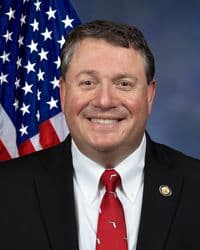
- Randy Fine
- Cosponsors
- - 4 - 0
- Introduced
- In Committee
What this bill would do
The TSP Fiduciary Security Act of 2026 aims to amend federal law regarding the Thrift Savings Fund. It establishes a new fiduciary duty for the Federal Retirement Thrift Investment Board to prevent investments and voting rights from harming United States national security. The bill requires the Secretary of Labor to create regulations and standards to determine compliance with these new security requirements. It also sets specific presumptions for when an investment or vote is considered non-compliant, particularly concerning certain foreign entities and transactions. Additionally, the bill prohibits mutual funds accessible through the mutual fund window from investing in entities based in the People's Republic of China.
Yes· 3 of 8
Does this make what the government does easier for the public to see?+4
The bill requires the Secretary of Labor to submit annual reports to Congress regarding the outcome of investment reviews.
Would people over 65 be better off under this?+3
The bill protects the integrity of the Thrift Savings Fund, which is a primary retirement vehicle for many seniors.
Would veterans be better off under this, taking everything together?+3
The bill protects the investment security of the Thrift Savings Fund, which serves members of the uniformed services.
The opposite
No question was scored the opposite.
Who it would affect, and how
Potential Positive Impacts for People
-
Protection of National Security Interests: The bill creates a duty for the Federal Retirement Thrift Investment Board to ensure that the Fund's investments and voting rights do not harm the national security of the United States (Section 2).
-
Standardized Security Oversight: The Secretary of Labor, in consultation with other high-level officials, will establish clear standards and a review process to ensure investments and voting rights align with national security needs (Section 4(a)(2)(A)).
-
Prevention of High-Risk Investments: The bill establishes a presumption that investments are non-compliant if they involve entities on specific high-risk lists, such as Communist Chinese military companies or the Department of Commerce's entity list (Section 4(a)(2)(C)(i)).
-
Restrictions on Risky Mutual Funds: The bill prevents mutual funds available through the TSP mutual fund window from including investments in any security from an entity based in the People's Republic of China (Section 5).
Potential Negative Impacts for People
-
Limited Liability for Fiduciaries: The bill includes a provision where no fiduciary shall be held personally liable for monetary damages or civil penalties regarding a breach of the new national security investment requirement until January 1, 2027 (Section 3(1)(2)).
-
Strict Investment Restrictions: The bill creates various presumptions that could restrict investments, such as those involving transactions that might reduce production of critical technology or those involving entities in "covered countries" like Russia, North Korea, Iran, Syria, Sudan, Venezuela, or Cuba (Section 4(a)(2)(C)).
Groups and Interests Ranking
Every group the model scored this bill for, from -10 to +10. Hover a score for the reason it gave.
- Demographic And Interest Groups
- Good For Seniors+3Good For Veterans+3Good For Middle Class Households+2
- Governance And Ideology
- Improves Government Transparency+4
- Education And Technology
- Improves Intellectual Property Fairness+3
- Social Issues And Justice
- Improves Social Security+3
- Economy And Finance
- Improves Consumer Protection+2
- National Security And Foreign Policy
- Improves Cybersecurity Defense+2
- 2/10/2026
- 1 Cosponsor added.
- 2/9/2026
- 1 Cosponsor added.
- 2/4/2026
- Referred to the House Committee on Oversight and Government Reform.
- 2 Cosponsors added.
- Introduced in House
One bill Congress.gov lists as related to this one — companions in the other chamber, earlier versions, and bills this one absorbed or was folded into.
 Pat Harrigan
Republican · North Carolina
 Nathaniel Moran
Republican · Texas
 John Rutherford
Republican · Florida
 Elise Stefanik
Republican · New York