Bill · H.R. 7306· House(119-HR-7306)
CLOSE Act

- Introduced
- 2/2/2026
- Last activity
- 2/2/2026 — Referred to the House Committee on Ways and Means.
- Sponsored by
- Max Miller
- Cosponsors
- - 4 - 0
- Introduced
- In Committee
What this bill would do
This bill, known as the "CLOSE Act," aims to amend the CARES Act. It seeks to terminate various unemployment insurance benefit payments. Specifically, it targets Pandemic Unemployment Assistance and Federal Pandemic Unemployment Compensation. The legislation also moves to repeal Pandemic Emergency Unemployment Compensation. Finally, it rescinds unobligated balances of amounts previously appropriated for these purposes.
Yes
Does this reduce what the federal government spends?+5
The bill rescinds unobligated balances of amounts previously appropriated for pandemic unemployment programs.
The opposite· 3 of 5
Does this increase support for people who lose their jobs?-10
The bill terminates Pandemic Unemployment Assistance, Federal Pandemic Unemployment Compensation, and Pandemic Emergency Unemployment Compensation.
Would households on low incomes be better off under this?-8
The termination of various unemployment assistance programs will negatively impact low-income households relying on these benefits.
Would union members be better off under this?-6
The bill reduces the availability of unemployment support which many workers rely on during economic transitions.
Who it would affect, and how
Potential Positive Impacts for People
- Administrative Continuity: Under Section 2, subsection (a)(1)(2) and subsection (b)(1)(2), the Secretary may continue to pay States for certain administrative expenses. This ensures that the costs of running these programs can still be covered even as the primary assistance ends.
Potential Negative Impacts for People
-
Termination of Pandemic Unemployment Assistance: According to Section 2, subsection (a)(1), the bill would cause the termination of assistance payments under Section 2102 of the CAates Act 30 days after enactment, meaning the Secretary can no longer make these payments.
-
Termination of Federal Pandemic Unemployment Compensation and Mixed Earner Unemployment Compensation: Per Section 2, subsection (b)(1), the bill would terminate the emergency increase in benefits after 30 days, preventing the Secretary from making payments under subsection (d)(1)(A)(i).
-
Prohibition on State Agreements: Section 2, subsection (b)(1)(2) states that no State may enter or reenter an agreement under the Federal Pandemic Unemployment Compensation section on or after the date of enactment.
-
Repeal of Pandemic Emergency Unemployment Compensation: Under Section 2, subsection (c)(1), the bill repeals subsections (c) and (d)(1) of section 2107 of the CARES Act, which removes those specific unemployment compensation provisions.
-
Rescission of Funds: Section 2, subsections (a)(2), (b)(1)(3), and (c)(2) all mandate the rescission of unobligated balances of amounts appropriated for Pandemic Unemployment Assistance, Federal Pandemic Unemployment Compensation, and Pandemic Emergency Unemployment Compensation.
Groups and Interests Ranking
Every group the model scored this bill for, from -10 to +10. Hover a score for the reason it gave.
- Demographic And Interest Groups
- Good For Low Income Households-8Good For Union Workers-6Good For Middle Class Households-5
- Economy And Finance
- Reduces Government Spending+5Increases Unemployment Benefits-10
- Social Issues And Justice
- Improves Poverty Reduction-5
- 2/11/2026
- 1 Cosponsor added.
- 2/2/2026
- Referred to the House Committee on Ways and Means.
- 3 Cosponsors added.
- Introduced in House
One bill Congress.gov lists as related to this one — companions in the other chamber, earlier versions, and bills this one absorbed or was folded into.
 Troy Balderson
Republican · Ohio
 Mike Carey
Republican · Ohio
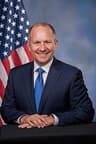 Lloyd Smucker
Republican · Pennsylvania
 Michael Turner
Republican · Ohio