Bill · H.R. 7215· House(119-HR-7215)
Stop SCAMS Act
- Introduced
- 1/22/2026
- Last activity
- 1/22/2026 — Referred to the Committee on the Judiciary, and in addition to the Committees on Energy and Commerce, and Financial Services, for a period to be subsequently determined by the Speaker, in each case for consideration of such provisions as fall within the jurisdiction of the committee concerned.
- Sponsored by
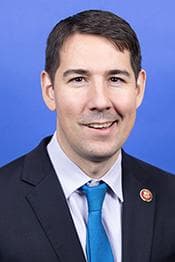
- Josh Harder
- Cosponsors
- - 0 - 2
- Introduced
- In Committee
What this bill would do
The "Stop SCAMS Act" directs the FBI, the Bureau of Consumer Financial Protection, and the Federal Trade Commission to work together to fight scams. The Director of the FBI is tasked with creating a government-wide strategy and a single definition for scams. These agencies must also work to harmonize how they collect data on scam types and financial losses. Additionally, the agencies are required to report estimates of annual complaints and total dollar losses. Finally, the agencies must establish plans to measure the effectiveness of their anti-scam training.
Yes· 3 of 5
Does this give people more protection from unfair business practices?+7
The bill directs federal agencies to create a government-wide strategy and improved data collection to counter scams and protect consumers.
Would people over 65 be better off under this?+6
The focus on anti-scam training and government-wide coordination provides better protection against fraud that often targets older populations.
Does this make what the government does easier for the public to see?+5
The bill requires agencies to make annual reports regarding the number of scam complaints and dollar losses publicly available.
The opposite
No question was scored the opposite.
Who it would affect, and how
Potential Positive Impacts for People
-
Coordinated Government Strategy: The bill requires a government-wide strategy to counter scams, which involves coordination between the FBI, the Bureau of Consumer Financial Protection, the Federal Trade Commission, and other agencies (Section 2(a)(1)(A)).
-
Improved Data Collection: By harmonizing data collection on scam types and dollar losses, the government can better identify scams (Section 2(a)(1)(C)).
-
Public Awareness of Scale: The agencies are required to report estimates of the number of consumers affected by scams and the resulting dollar losses (Section 2(a)(2)).
-
Educational Training: The FBI, the Bureau of Consumer Financial Protection, and the Federal Trade Commission are required to offer anti-scam training through in-person events and webinars (Section 2(b)(1)(B), 2(b)(2)(B), and 2(b)(3)(B)).
Potential Negative Impacts for People
- No negative impacts or burdens are explicitly mentioned in the provided text.
Groups and Interests Ranking
Every group the model scored this bill for, from -10 to +10. Hover a score for the reason it gave.
- Demographic And Interest Groups
- Good For Seniors+6Good For Low Income Households+4
- Economy And Finance
- Improves Consumer Protection+7
- Governance And Ideology
- Improves Government Transparency+5
- National Security And Foreign Policy
- Improves Cybersecurity Defense+4
- 4/13/2026
- 1 Cosponsor added.
- 1/22/2026
- Referred to the Committee on the Judiciary, and in addition to the Committees on Energy and Commerce, and Financial Services, for a period to be subsequently determined by the Speaker, in each case for consideration of such provisions as fall within the jurisdiction of the committee concerned.
- 1 Cosponsor added.
- Introduced in House
 Brian Fitzpatrick
Republican · Pennsylvania
 Jefferson Van Drew
Republican · New Jersey