Bill · H.R. 7207· House(119-HR-7207)
Presidential Conflicts of Interest Accountability Act
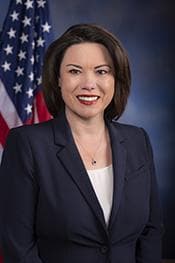
- Introduced
- 1/22/2026
- Last activity
- 1/22/2026 — Referred to the Committee on Oversight and Government Reform, and in addition to the Committee on the Judiciary, for a period to be subsequently determined by the Speaker, in each case for consideration of such provisions as fall within the jurisdiction of the committee concerned.
- Sponsored by
- Angie Craig
- Cosponsors
- None
- Introduced
- In Committee
What this bill would do
The Presidential Conflicts of Interest Accountability Act aims to amend title 5 of the United States Code. It requires the President and the Vice President to disclose their financial interests and those of their spouses and dependent children. This includes the submission of tax returns for the three most recent taxable years. Additionally, officials must divest from any financial interests that pose a potential conflict of interest by transferring them to a qualified blind trust. The Office of Government Ethics will provide annual reports to monitor these financial interests. The bill also establishes enforcement mechanisms through the Attorney General or State attorneys general.
Yes
Does this make what the government does easier for the public to see?+8
The bill mandates detailed financial disclosures and the submission of several years of tax returns by the President and Vice President.
Does this give people more protection from unfair business practices?+3
The bill reduces potential conflicts of interest by requiring the divestment of problematic financial assets.
The opposite
Would high-income households be better off under this?-5
The bill requires the President, Vice President, and their families to divest and sell specific financial interests.
Who it would affect, and how
Potential Positive Impacts for People
-
Increased Transparency through Financial Disclosures: The President and Vice President must submit a detailed disclosure of financial interests, including those of a spouse or dependent child, within 30 days of assuming office (Section 2(b)(1)). This provides the public and Congress with specific information regarding the financial holdings of top officials.
-
Public Disclosure of Tax Returns: The bill requires the submission of tax returns for the three most recent taxable years (Section 2(b)(1)(C)). This ensures that more comprehensive financial information is available for review.
-
Conflict of Interest Mitigation: The Act requires the President, Vice President, and their families to divest from interests posing a potential conflict of interest by moving them into a qualified blind trust (Section 2(b)(2)). The trustee must then sell those interests to purchase conflict-free holdings or return the proceeds (Section 2(b)(2)(1)-(2)).
-
Oversight and Accountability: The Director of the Office of Government Ethics is required to submit an annual report to Congress regarding the financial interests of the President, Vice President, and their families (Section 2(c)(1)). This report indicates if any interest poses a potential conflict or if required divestments have been made (Section 2(c)(2)).
-
Legal Recourse for Non-compliance: The Attorney General or a State attorney general can seek court relief if the Office of Government Ethics cannot confirm substantial compliance or if there is probable cause of non-compliance (Section 2(d)(1)).
Potential Negative Impacts for People
-
Requirement to Divest Assets: The President, Vice President, spouse, and dependent child are required to divest financial interests that pose a potential conflict of interest (Section 2(b)(2)(1)). This could require significant changes to their personal financial portfolios.
-
Mandatory Sale of Interests: Once interests are moved to a qualified blind trust, the trustee must sell those interests to either purchase conflict-free holdings or return the proceeds to the official or their family (Section 2(b)(2)(2)).
Groups and Interests Ranking
Every group the model scored this bill for, from -10 to +10. Hover a score for the reason it gave.
- Governance And Ideology
- Improves Government Transparency+8
- Demographic And Interest Groups
- Good For High Income Households-5
- Economy And Finance
- Improves Consumer Protection+3
- 1/22/2026
- Referred to the Committee on Oversight and Government Reform, and in addition to the Committee on the Judiciary, for a period to be subsequently determined by the Speaker, in each case for consideration of such provisions as fall within the jurisdiction of the committee concerned.
- Introduced in House