Bill · H.R. 7179· House(119-HR-7179)
Historic Infrastructure Management and Jobs Training Act
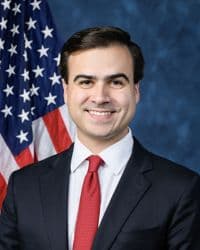
- Introduced
- 1/21/2026
- Last activity
- 1/21/2026 — Referred to the House Committee on Natural Resources.
- Sponsored by
- Pablo Hernández
- Cosponsors
- - 1 - 0
- Introduced
- In Committee
What this bill would do
This bill, known as the ``Historic Infrastructure Management and Jobs Training Act'', seeks to amend title 54 of the United States Code. It proposes the creation of the Historic Preservation Workforce Development Program. Under this program, the Secretary will establish a competitive grant program. The goal is to support training, apprenticeships, and skilled trade development for preserving historic properties and objects. Eligible entities include various government bodies, nonprofit organizations, and educational institutions.
Yes· 3 of 9
Is this likely to create jobs?+5
The bill establishes a competitive grant program to support workforce training, apprenticeships, and skilled trade development.
Would people in rural areas be better off under this?+4
The bill prioritizes training and placing workers in rural communities with limited expertise.
Does this invest in rural communities?+4
The bill directs the Secretary to give priority to projects that train or place workers in rural or underserved communities.
The opposite
No question was scored the opposite.
Who it would affect, and how
Potential Positive Impacts for People
-
Workforce Training and Skill Development: The program supports training in specialized areas like historic masonry, timber framing, decorative finishes, and the conservation of archival or photographic materials (Section 2(a)). This provides opportunities for individuals to learn specialized skills.
-
Economic Support for High-Need Areas: The Secretary is directed to give priority to projects that serve areas with high unemployment rates compared to the national average (Section 2(d)(1)).
-
Support for Underserved Communities: Priority is given to training or placing workers in areas that currently have limited preservation expertise, including rural or underserved communities (Section 2(d)(2)).
-
Educational Opportunities: Accredited educational institutions can receive grants to offer programs or training relevant to historic preservation or conservation fields (Section 2(b)(3)).
Potential Negative Impacts for People
- No negative impacts or burdens are explicitly stated in the provided text.
Groups and Interests Ranking
Every group the model scored this bill for, from -10 to +10. Hover a score for the reason it gave.
- Demographic And Interest Groups
- Good For Rural Residents+4Good For Low Income Households+3Good For Native Americans+3Good For Middle Class Households+2
- Economy And Finance
- Increases Job Creation+5Improves Economic Growth+3
- Environment Energy And Infrastructure
- Improves Rural Development+4
- Education And Technology
- Improves College Affordability+2
- Social Issues And Justice
- Improves Poverty Reduction+2
- 1/21/2026
- Referred to the House Committee on Natural Resources.
- 1 Cosponsor added.
- Introduced in House
 Darren Soto
Democrat · Florida