Bill · H.R. 7126· House(119-HR-7126)
SECURE Minerals Act of 2026
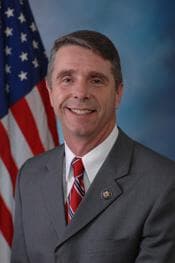
- Introduced
- 1/15/2026
- Last activity
- 2/24/2026 — Subcommittee Hearings Held
- Sponsored by
- Robert Wittman
- Cosponsors
- - 5 - 1
- Introduced
- In Committee
What this bill would do
This bill establishes the Strategic Resilience Reserve Corporation of the United States, a wholly owned government corporation. The Reserve is designed to create a more secure and stable supply chain for critical minerals and materials. It aims to reduce reliance on foreign entities, specifically targeting the market dominance of the People's Republic of China. The corporation will be overseen by a seven-member Board of Governors appointed by the President. This Board will manage various financing and acquisition tools to support domestic and partner country production. An authorization of $2,500,000,000 is provided to carry out these functions.
Yes· 3 of 18
Does this put more money into wind, solar and other renewable power?+6
The bill specifically targets the development of mineral supplies necessary for renewable energy technologies.
Is this likely to create jobs?+5
The bill's investment in domestic extraction, processing, and recycling is intended to support economic growth and job creation in those sectors.
Is this likely to grow the economy?+5
The bill provides financial support to bolster domestic manufacturing, energy, and high-tech sectors.
The opposite
Does this reduce what the federal government owes?-2
The bill authorizes $2.5 billion in new government spending through the establishment of a government corporation.
Does this reduce what the federal government spends?-2
The bill creates a new $2.5 billion government corporation, increasing overall federal spending.
Does this make the government pay for what it commits to?-2
The bill introduces market risks and potential financial losses through government-managed loans and equity investments.
Who it would affect, and how
Potential Positive Impacts for People
-
Support for Domestic Industry and Innovation: The bill aims to support a free, fair, and competitive market where domestic producers and processors can compete and innovate (Section 101(b)(1)).
-
Enhanced National and Economic Security: By creating a stable supply chain, the bill seeks to protect the United States from vulnerabilities caused by supply disruptions, geopolitical tensions, and economic manipulation (Section 2 Findings).
-
Development of Sustainable Production: The Reserve is intended to support responsible production standards regarding transparency, environmental, and labor practices (Section 101(b)(4)).
-
Support for Green Energy and High-Tech Sectors: The focus on critical minerals supports the production of batteries, solar panels, wind turbines, and other high-tech applications (Section 2 Findings).
-
Job and Economic Growth: The bill identifies that investment in domestic extraction, processing, and recycling is necessary to support the economic growth of the United States (Section 2 Findings).
Potential Negative Impacts for People
-
Financial Risk to the Government: The bill authorizes $2,500,000,000 in appropriations to be used for the Reserve (Section 101(c)).
-
Potential for Unforeseen Financial Losses: The Board is tasked with managing complex financial instruments, such as loans, equity investments, and acquisitions, which involve market risks (Section 206).
-
Economic Impact of Price Stabilization: The Reserve's actions to maintain stable prices through sales or acquisitions could influence commodity markets (Section 101(b)(3)).
-
Risk of Asset Seizure: In cases of default, the Reserve has the authority to take possession of an authorized intermediary's critical mineral and material inventories (Section 206(b)(1)(D)(i)).
Groups and Interests Ranking
Every group the model scored this bill for, from -10 to +10. Hover a score for the reason it gave.
- Environment Energy And Infrastructure
- Increases Renewable Energy Investment+6Improves Environmental Protections+3Reduces Carbon Emissions+3Improves Public Transit+2
- Economy And Finance
- Improves Economic Growth+5Increases Job Creation+5Improves Small Business Support+3Improves Consumer Protection+2Reduces Inflation+2Improves Fiscal Responsibility-2Reduces Government Spending-2Reduces National Debt-2
- Demographic And Interest Groups
- Good For Business Owners+5Good For Union Workers+3Good For Low Income Households+1Good For Middle Class Households+1
- National Security And Foreign Policy
- Improves International Alliances+4
- Education And Technology
- Increases Scientific Research Funding+2
- Governance And Ideology
- Improves Government Transparency+2
- Healthcare
- Improves Healthcare Access+1
- Social Issues And Justice
- Improves Affordable Housing+1
- 10/6/2026
- 1 Cosponsor added.
- 4/20/2026
- 1 Cosponsor added.
- 2/24/2026
- Subcommittee Hearings Held
- 2/23/2026
- 1 Cosponsor added.
- 2/17/2026
- Referred to the Subcommittee on Energy and Mineral Resources.
- 2/3/2026
- 2 Cosponsors added.
- 1/15/2026
- Referred to the Committee on Natural Resources, and in addition to the Committee on Foreign Affairs, for a period to be subsequently determined by the Speaker, in each case for consideration of such provisions as fall within the jurisdiction of the committee concerned.
- 1 Cosponsor added.
- Introduced in House
One bill Congress.gov lists as related to this one — companions in the other chamber, earlier versions, and bills this one absorbed or was folded into.
 Paul Gosar
Republican · Arizona
 Pat Harrigan
Republican · North Carolina
 Jennifer Kiggans
Republican · Virginia
 John Moolenaar
Republican · Michigan
 Chris Pappas
Democrat · New Hampshire
 Jefferson Shreve
Republican · Indiana