Bill · H.R. 7124· House(119-HR-7124)
Realigning Mobile Phone Biometrics for American Privacy Protection Act
- Introduced
- 1/15/2026
- Last activity
- 1/16/2026 — Referred to the Subcommittee on Border Security and Enforcement.
- Sponsored by
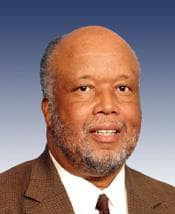
- Bennie Thompson
- Cosponsors
- - 5 - 0
- Introduced
- In Committee
What this bill would do
This bill, known as the "Realigning Mobile Phone Biometrics for American Privacy Protection Act," aims to restrict the use of specific facial recognition mobile applications. It directs the Secretary of Homeland Security to create standards that prohibit the use of the Mobile Fortify Mobile Application, Mobile Identify Mobile Application, or their successors, except for identification at ports of entry. The act also prevents the Department of Homeland Security from sharing these applications with other federal, state, local, tribal, or territorial agencies. Additionally, it requires the removal of these applications from Department information technology and the remote disabling of such applications on non-Department devices. Finally, the bill mandates the destruction of captured biometric data of United States citizens within specific timeframes.
Yes· 3 of 9
Does this protect people from being watched or searched?+9
The bill provides strong protections against the collection and retention of facial recognition biometric data for US citizens.
Does this give people more control over their personal data?+8
The bill mandates the destruction of biometric data and restricts the sharing of facial recognition applications to protect personal privacy.
Would white Americans be better off under this?+4
The bill mandates the destruction of existing biometric images or fingerprints of United States citizens.
The opposite
Does this give the government more power to monitor people inside the country?-6
The bill reduces domestic surveillance by prohibiting the use and sharing of specific facial recognition mobile applications outside of ports of entry.
Does this give the federal government more power?-3
The bill limits the ability of federal agencies to share specific surveillance technology with state and local jurisdictions.
Does this tighten control of the border?-2
The bill restricts the use of mobile biometric identification tools to only the immediate vicinity of ports of entry.
Who it would affect, and how
Potential Positive Impacts for People
-
Privacy Protection for Citizens: The bill requires the destruction of images, photographs, or fingerprints of United States citizens captured via the specified mobile applications. Under paragraph (4), this data must be destroyed before new standards are implemented, and under paragraph (5), data captured at ports of entry must be destroyed within 12 hours.
-
Limiting Data Sharing: The bill prevents the Department of Homeland Security from sharing the Mobile Fortify Mobile Application, Mobile Identify Mobile Application, or successor applications with any other Federal, State, local, Tribal, or territorial agency as stated in Section 2, paragraph (2).
-
Restriction of Application Use: The bill limits the use of these specific facial recognition applications to only identification purposes at ports of entry, as dictated by Section 2, paragraph (1).
Potential Negative Impacts for People
- No specific negative impacts are explicitly detailed in the text provided.
Groups and Interests Ranking
Every group the model scored this bill for, from -10 to +10. Hover a score for the reason it gave.
- Demographic And Interest Groups
- Good For White Americans+4Good For African Americans+3Good For Asian Americans+3Good For Hispanic Americans+3Good For Urban Residents+3
- Governance And Ideology
- Improves Privacy Rights+9Improves Government Transparency+3Increases Federal Power-3
- Education And Technology
- Improves Data Privacy+8
- National Security And Foreign Policy
- Increases Domestic Surveillance-6
- Social Issues And Justice
- Improves Disability Rights+2Improves Border Security-2
- 1/16/2026
- Referred to the Subcommittee on Border Security and Enforcement.
- 1/15/2026
- Referred to the House Committee on Homeland Security.
- 5 Cosponsors added.
- Introduced in House
 Yvette Clarke
Democrat · New York
 J. Correa
Democrat · California
 Adriano Espaillat
Democrat · New York
 Grace Meng
Democrat · New York
 Shri Thanedar
Democrat · Michigan