Bill · H.R. 7117· House(119-HR-7117)
Fast Track To and Through College Act
- Introduced
- 1/15/2026
- Last activity
- 1/15/2026 — Referred to the House Committee on Education and Workforce.
- Sponsored by
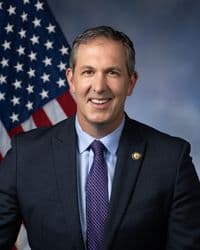
- Johnny Olszewski
- Cosponsors
- - 1 - 1
- Introduced
- In Committee
What this bill would do
The "Fast Track To and Through College Act" aims to increase college completion rates and lower costs. It does this by aligning high school and postsecondary education and improving how credits transfer. The bill establishes "early college fast track pathways" and "early high school graduation fast track pathways." States can apply for competitive grants to implement these systems and create statewide articulation agreements. It also allows certain high school students to receive Federal Pell Grants. These changes are intended to accelerate the time it takes for students to earn their degrees.
Yes· 3 of 10
Would students be better off under this?+8
The bill directly benefits students by increasing credit transferability, providing scholarships, and expanding financial aid access.
Does this make college cost less?+7
The bill reduces college costs by accelerating time to degree and providing Federal Pell Grants to high school students in early college pathways.
Would people in their twenties and thirties be better off under this?+6
The bill provides pathways for high school students to accelerate their transition into higher education and the workforce.
The opposite
No question was scored the opposite.
Who it would affect, and how
Potential Positive Impacts for People
-
Reduced College Costs: The bill seeks to reduce costs by accelerating the time it takes to earn a degree (Section 2, Section 416A).
-
Financial Aid for High School Students: High school students participating in an early college fast track pathway can receive Federal Pell Grants (Section 416E(a)).
-
Preservation of Pell Grant Eligibility: Federal Pell Grants awarded to these students for up to two semesters will not count toward the standard 12-semester eligibility limit (Section 416E(b)).
-
Increased Credit Transferability: The bill requires states to develop articulation agreements that guarantee credits earned in early college pathways will count toward degrees at public institutions and certain private nonprofit institutions (Section 416C(f)(2)(D)(iv)).
-
Scholarships for Early Graduates: Students who graduate high school early through a fast track pathway may receive scholarships (Section 416C(f)(2)(E)(ii)).
-
No-Cost Pathways: The bill requires that students participating in an early college fast track pathway are not required to pay for related tuition, fees, books, or supplies (Section 416C(f)(2)(H)(i)).
Potential Negative Impacts for People
-
State Funding Requirements: States receiving assistance must maintain their current levels of funding for advanced coursework, which may place a financial obligation on the state (Section 416H(a)).
-
Potential Funding Withholding: If a state fails to meet maintenance of effort requirements, the Secretary may withhold grant funds (Section 416H(d)).
Groups and Interests Ranking
Every group the model scored this bill for, from -10 to +10. Hover a score for the reason it gave.
- Demographic And Interest Groups
- Good For Students+8Good For Low Income Households+6Good For Young Adults+6Good For Middle Class Households+4Good For Hispanic Americans+3Good For Native Americans+3Good For People With Disabilities+3
- Education And Technology
- Improves College Affordability+7
- Economy And Finance
- Improves Economic Growth+3
- Social Issues And Justice
- Improves Poverty Reduction+3
- 5/12/2026
- 1 Cosponsor added.
- 1/15/2026
- Referred to the House Committee on Education and Workforce.
- 1 Cosponsor added.
- Introduced in House
One bill Congress.gov lists as related to this one — companions in the other chamber, earlier versions, and bills this one absorbed or was folded into.
 Wesley Bell
Democrat · Missouri
 James Moylan
Republican · Guam