Bill · H.R. 711· House(119-HR-711)
FAIR Act of 2025
- Introduced
- 1/23/2025
- Last activity
- 1/23/2025 — Referred to the Committee on the Judiciary, and in addition to the Committees on Oversight and Government Reform, Education and Workforce, and House Administration, for a period to be subsequently determined by the Speaker, in each case for consideration of such provisions as fall within the jurisdiction of the committee concerned.
- Sponsored by
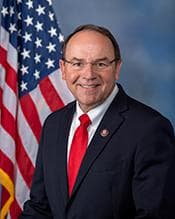
- Thomas Tiffany
- Cosponsors
- - 9 - 0
- Introduced
- In Committee
What this bill would do
The Fairness, Anti-discrimination and Individual Rights Act of 2025 aims to provide equal protection of the law. It prohibits the Federal Government and its agents from intentionally discriminating against or granting preferences based on race, color, or national origin. These prohibitions apply to federal contracts, employment, and other federally conducted programs. Additionally, the Act restricts state or private entities receiving federal financial assistance from such practices regarding contracts, employment, or educational admissions. Federal agencies must review and modify their policies to comply with these rules within six months.
Yes· 3 of 5
Does this protect the right to fair treatment by the courts?+4
The bill provides a legal remedy and the right to attorney's fees for individuals aggrieved by discrimination.
Does this give the federal government more power?+3
The bill mandates that federal agencies review and modify their policies to comply with these new prohibitions.
Would white Americans be better off under this?+3
The bill prohibits race-based preferences and quotas in federal and state-funded programs.
The opposite· 3 of 4
Does this narrow racial gaps in how people are treated?-5
The bill prohibits race-based preferences and quotas, which may impact programs designed to promote racial equity.
Would Black Americans be better off under this?-3
The prohibition of race-based preferences and quotas may impact diversity initiatives intended to support Black Americans.
Would Hispanic Americans be better off under this?-3
The prohibition of race-based preferences and quotas may impact diversity initiatives intended to support Hispanic Americans.
Who it would affect, and how
Potential Positive Impacts for People
-
Equal Treatment in Federal Actions: The bill prohibits the Federal Government from intentionally discriminating against or granting preferences based on race, color, or national origin regarding federal contracts, employment, or any other federally conducted activity (Section 2).
-
Standardized Admissions and Employment: State or private entities receiving federal financial assistance are prohibited from discriminating or granting preferences based on race, color, or national origin in connection with contracts, employment, or admission to educational institutions (Section 3).
-
Legal Recourse for Individuals: Any person who feels aggrieved by a violation of these rules can bring a civil action to obtain appropriate relief, such as back pay (Section 6).
-
Coverage of Legal Costs: A person who prevails in a civil action under this Act can be awarded a reasonable attorney's fee as part of the costs (Section 6).
Potential Negative Impacts for People
- No specific negative impacts are explicitly detailed in the text provided.
Groups and Interests Ranking
Every group the model scored this bill for, from -10 to +10. Hover a score for the reason it gave.
- Governance And Ideology
- Improves Due Process+4Increases Federal Power+3Improves Government Transparency+2
- Social Issues And Justice
- Improves Racial Equity-5
- Education And Technology
- Improves School Choice-2
- Demographic And Interest Groups
- Good For White Americans+3Good For Asian Americans+2Good For African Americans-3Good For Hispanic Americans-3
- 7/21/2026
- 1 Cosponsor added.
- 1/23/2025
- Referred to the Committee on the Judiciary, and in addition to the Committees on Oversight and Government Reform, Education and Workforce, and House Administration, for a period to be subsequently determined by the Speaker, in each case for consideration of such provisions as fall within the jurisdiction of the committee concerned.
- 8 Cosponsors added.
- Introduced in House
 Glenn Grothman
Republican · Wisconsin
 Harriet Hageman
Republican · Wyoming
 Mary Miller
Republican · Illinois
 Barry Moore
Republican · Alabama
 Burgess Owens
Republican · Utah
 Andrew Ogles
Republican · Tennessee
 W. Steube
Republican · Florida
 Claudia Tenney
Republican · New York
 Randy Weber
Republican · Texas