Bill · H.R. 709· House(119-HR-709)
National Training Center for Counter-Unmanned Aircraft Systems Act
- Introduced
- 1/23/2025
- Last activity
- 1/24/2025 — Referred to the Subcommittee on Aviation.
- Sponsored by
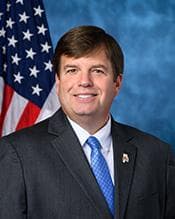
- Dale Strong
- Cosponsors
- None
- Introduced
- In Committee
What this bill would do
This bill seeks to amend the Homeland Security Act of 2002 regarding counter-unmanned aircraft systems (UAS). It directs the Attorney General and the Secretary of Homeland Security to work together to establish training for these systems. Additionally, these officials must coordinate with the Administrator of the Federal Aviation Administration to create standards for initial and recurrent training or certifications for operators. The bill also requires officials to consider how this technology impacts aviation safety and airspace use.
Yes· 3 of 6
Does this tighten control of the border?+5
The bill enhances security capabilities through the establishment of specialized training for counter-unmanned aircraft systems.
Does this better protect the country from computer attacks?+3
The training and certification standards for counter-UAS technology provide better defense against unauthorized unmanned aerial threats.
Would people in cities be better off under this?+2
Enhanced counter-UAS capabilities provide better security against aerial threats in populated areas.
The opposite
No question was scored the opposite.
Who it would affect, and how
Potential Positive Impacts for People
-
Establishment of specialized training: The Attorney General, working with the Secretary of Homeland Security, may provide training and establish specific facilities or training centers for counter-UAS measures (Section 210H).
-
Standardized operator qualifications: The Secretary of Homeland Security and Attorney General will establish standards for initial and recurrent training programs or certifications for those seeking to operate detection and mitigation systems, equipment, or technology (Section 210I(a)).
-
Protection of aviation safety: Implementation requires officials to consider potential impacts on aviation safety, civil aviation and aerospace operations, aircraft airworthiness, or the civilian use of airspace (Section 210I(b)(1)).
Potential Negative Impacts for People
- Training and certification burdens: The bill requires the establishment of specific standards for initial and recurrent training programs or certifications, as well as requirements for how often an individual must complete and renew such training (Section 210I(a) and Section 210I(b)(2)).
Groups and Interests Ranking
Every group the model scored this bill for, from -10 to +10. Hover a score for the reason it gave.
- Social Issues And Justice
- Improves Border Security+5
- National Security And Foreign Policy
- Improves Cybersecurity Defense+3
- Demographic And Interest Groups
- Good For Urban Residents+2
- Education And Technology
- Increases Scientific Research Funding+2
- Environment Energy And Infrastructure
- Improves Public Transit+2
- Governance And Ideology
- Improves Government Transparency+1
- 1/24/2025
- Referred to the Subcommittee on Aviation.
- 1/23/2025
- Referred to the Committee on the Judiciary, and in addition to the Committee on Transportation and Infrastructure, for a period to be subsequently determined by the Speaker, in each case for consideration of such provisions as fall within the jurisdiction of the committee concerned.
- Introduced in House