Bill · H.R. 7069· House(119-HR-7069)
Affordable Food and Energy Act of 2026
- Introduced
- 1/14/2026
- Last activity
- 5/20/2026 — Referred to the Subcommittee on Nutrition and Foreign Agriculture.
- Sponsored by
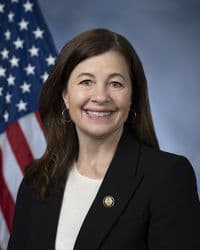
- Kristen McDonald Rivet
- Cosponsors
- None
- Introduced
- In Committee
What this bill would do
This bill, known as the ``Affordable Food and Energy Act of 2026'', aims to amend the Food and Nutrition Act of 2008. The primary goal is to expand benefits to households that are eligible for Federal and State energy assistance programs. It modifies how utility allowances and energy assistance payments are treated. These changes specifically address households receiving payments under the Low-Income Home Energy Assistance Act of 1981 or similar programs. The act is set to take effect on July 4, 2025.
Yes· 3 of 24
Would households on low incomes be better off under this?+5
The bill expands utility allowances and recognizes energy assistance as an out-of-pocket expense for those in need.
Is this likely to lift people out of poverty?+3
The bill expands utility allowances and recognizes energy assistance as out-of-pocket expenses for eligible households.
Would children be better off under this?+2
The expansion of energy assistance benefits can help lower-income households better manage essential costs.
The opposite
No question was scored the opposite.
Who it would affect, and how
Potential Positive Impacts for People
-
Expanded access to utility allowances: Households that received an energy assistance payment greater than $20 in the current month or the previous 12 months may now be able to access a standard utility allowance that reflects heating and cooling costs. This is found in Section 2, subsection (1).
-
Recognition of energy assistance as out-of-pocket expenses: Under this bill, an expense paid on behalf of a household under a State law to provide energy assistance will be considered an out-of-pocket expense incurred and paid by the household. This provides a benefit for the purposes of subsection (e)(6) as stated in Section 2, subsection (2)(B).
-
Direct treatment of energy assistance payments: Payments made under a State law to provide energy assistance to a household will be considered money payable directly to the household. This is detailed in Section 2, subsection (2)(A).
Potential Negative Impacts for People
- No negative impacts are explicitly stated in the provided text.
Groups and Interests Ranking
Every group the model scored this bill for, from -10 to +10. Hover a score for the reason it gave.
- Demographic And Interest Groups
- Good For Low Income Households+5Good For African Americans+2Good For Asian Americans+2Good For Children+2Good For Hispanic Americans+2Good For Native Americans+2Good For People With Disabilities+2Good For Retirees+2Good For Seniors+2Good For White Americans+2Good For Young Adults+2Good For Farmers+1Good For Immigrants+1Good For L G B T Q Community+1Good For Men+1Good For Middle Aged+1Good For Middle Class Households+1Good For Rural Residents+1Good For Students+1Good For Union Workers+1Good For Urban Residents+1Good For Veterans+1Good For Women+1
- Social Issues And Justice
- Improves Poverty Reduction+3
- 5/20/2026
- Referred to the Subcommittee on Nutrition and Foreign Agriculture.
- 1/14/2026
- Referred to the House Committee on Agriculture.
- Introduced in House