Bill · H.R. 7035· House(119-HR-7035)
Credit Card Competition Act of 2026
- Introduced
- 1/13/2026
- Last activity
- 1/13/2026 — Referred to the House Committee on Financial Services.
- Sponsored by
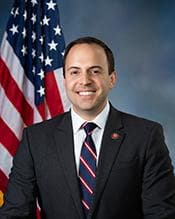
- Lance Gooden
- Cosponsors
- - 4 - 4
- Introduced
- In Committee
What this bill would do
The Credit Card Competition Act of 2026 aims to amend the Electronic Fund Transfer Act to increase competition in credit card transactions. It requires the Board of Governors of the Federal Reserve system to create regulations that prevent card issuers or networks from restricting transactions to a single network. The bill prohibits exclusive networks and prevents routing restrictions that would stop merchants from choosing how their transactions are processed. Additionally, the Board must establish a list of networks that pose national security risks or are owned by foreign state entities. These regulations are intended to ensure that merchants can direct electronic credit transactions over various available networks without facing penalties.
Yes· 3 of 5
Would business owners be better off under this?+6
The bill specifically empowers merchants to direct transaction routing and protects them from network-imposed penalties.
Does this make it easier to run a small business?+5
The bill benefits merchants by allowing them to choose more competitive payment networks and preventing restrictive penalties.
Does this give the federal government more power?+4
The bill expands the authority of the Federal Reserve Board to regulate private payment card networks.
The opposite
Would billionaires be better off under this?-5
Large card issuers and networks face new regulatory restrictions and competition requirements.
Who it would affect, and how
Potential Positive Impacts for People
-
Increased Network Competition: The bill requires the Board to prescribe regulations so that a covered card issuer or payment card network cannot restrict a credit card to only one network (Section 2(a)(1)(A)). This could allow for more than one network to process a single credit card transaction.
-
Freedom of Routing for Merchants: The bill prohibits card issuers or networks from inhibiting the ability of a person who accepts credit cards to direct the routing of electronic credit transactions to other available networks (Section 2(a)(1)(B)(i)).
-
Protection Against Security-Based Restrictions: The regulations would prevent the requirement of specific security technologies, like certain authentications or tokenizations, that cannot be used by all networks that might process the transaction (Section 2(a)(1)(B)(i)(II)).
-
Protection from Penalties: The bill prevents companies from imposing financial or other penalties on people for choosing to direct transactions through a specific network or for failing to meet certain transaction volume requirements (Section 2(a)(1)(B)(ii)).
-
National Security Safeguards: The Board is required to create a public list of networks that pose a risk to the national security of the United States or are owned/operated by a foreign state entity (Section 2(a)(1)(D)).
Potential Negative Impacts for People
- Exclusion of 3-party Payment Systems: The competition regulations described in the bill do not apply to credit cards issued in a 3-party payment system model (Section 2(a)(1)(C)).
Groups and Interests Ranking
Every group the model scored this bill for, from -10 to +10. Hover a score for the reason it gave.
- Economy And Finance
- Improves Small Business Support+5Improves Consumer Protection+3
- Governance And Ideology
- Increases Federal Power+4Improves Government Transparency+2
- Demographic And Interest Groups
- Good For Business Owners+6Good For Billionaires-5
- 9/15/2026
- 1 Cosponsor added.
- 6/29/2026
- 1 Cosponsor added.
- 2/9/2026
- 2 Cosponsors added.
- 1/23/2026
- 1 Cosponsor added.
- 1/20/2026
- 2 Cosponsors added.
- 1/13/2026
- Referred to the House Committee on Financial Services.
- 1 Cosponsor added.
- Introduced in House
One bill Congress.gov lists as related to this one — companions in the other chamber, earlier versions, and bills this one absorbed or was folded into.
 Mark DeSaulnier
Democrat · California
 Abraham Hamadeh
Republican · Arizona
 Zoe Lofgren
Democrat · California
 James McGovern
Democrat · Massachusetts
 Thomas Tiffany
Republican · Wisconsin
 Derek Tran
Democrat · California
 Jefferson Van Drew
Republican · New Jersey
 Tony Wied
Republican · Wisconsin