Bill · H.R. 7022· House(119-HR-7022)
Mystic Alerts Act
- Introduced
- 1/12/2026
- Last activity
- 9/30/2026 — Passed Senate without amendment by Unanimous Consent. (consideration: CR S5237-5238)
- Sponsored by
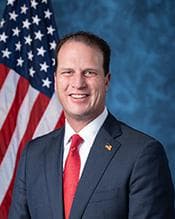
- August Pfluger
- Cosponsors
- - 2 - 2
- Introduced
- Passed House
- Passed Senate
What this bill would do
This bill is called the Mystic Alerts Act and it provides for the transmission of emergency alerts by satellite. Under the law, covered service providers must file an election with the Federal Communications Commission about whether they intend to transmit emergency alerts by satellite. If a provider chooses to transmit these alerts, they must follow specific technical standards and cannot charge customers a separate fee for the service. Providers who elect not to transmit alerts by satellite must notify their new and existing subscribers of that choice. The Federal Communications Commission is also required to publish a Notice of Proposed Rulemaking and eventually issue a final rule to establish requirements for satellite alerting capability.
Yes· 3 of 6
Does this improve help for people hit by a disaster?+7
The bill enhances public safety by establishing protocols for emergency satellite alerts involving FEMA.
Would business owners be better off under this?+5
The bill provides liability protection for service providers transmitting emergency alerts.
Would people in rural areas be better off under this?+5
Enhanced satellite alerting provides improved safety for those in remote or rural areas.
The opposite
Does this give people more control over their personal data?-3
The bill provides liability protection for providers when they release subscriber information to government agencies.
Does this protect people from being watched or searched?-2
The act facilitates the release of subscriber data to government agencies without liability.
Who it would affect, and how
Potential Positive Impacts for People
-
Section 2(a)(5): Providers cannot impose a separate or additional charge for transmitting emergency alerts by satellite. This is a positive outcome for individuals because it ensures that critical safety information is delivered without adding extra financial burdens to consumers.
-
Section 2(a)(4): If a provider elects to transmit emergency alerts by satellite, the provider must prevent the device of any subscriber who opts out of receiving emergency alerts from receiving those alerts by satellite. This benefits people by respecting consumer choice and allowing individuals to control what alerts come through to their personal devices.
Potential Negative Impacts for People
- Section 2(c)(1): Covered service providers that transmit emergency alerts by satellite and meet their obligations shall not be liable for any act or omission related to or harm resulting from the transmission of, or failure to transmit, an emergency alert by satellite, or for the release of subscriber information to government and public safety agencies. This provision could be seen as a burden or negative consequence for individuals because it shields companies from accountability if something goes wrong with an alert or if subscriber information is released.
Groups and Interests Ranking
Every group the model scored this bill for, from -10 to +10. Hover a score for the reason it gave.
- Demographic And Interest Groups
- Good For Business Owners+5Good For Rural Residents+5
- Environment Energy And Infrastructure
- Improves Disaster Relief And F E M A+7
- Economy And Finance
- Improves Consumer Protection+5
- Education And Technology
- Improves Internet Access+4Improves Data Privacy-3
- Governance And Ideology
- Increases Federal Power+3Improves Privacy Rights-2
- Enrolled Bill
The final version, on its way to the President
What changed from Referred in Senate: No change to the wording. Only the printed details that record the bill’s progress, such as the heading and dates, are different.
- 9/30/2026
- Senate Committee on Commerce, Science, and Transportation discharged by Unanimous Consent.
- Passed/agreed to in Senate: Passed Senate without amendment by Unanimous Consent.
- Passed Senate without amendment by Unanimous Consent. (consideration: CR S5237-5238)
- 9/16/2026
- Committee on Commerce, Science, and Transportation. Ordered to be reported with an amendment in the nature of a substitute favorably.
- 4/21/2026
- Received in the Senate and Read twice and referred to the Committee on Commerce, Science, and Transportation.
- 4/20/2026
- Motion to reconsider laid on the table Agreed to without objection.
- Passed/agreed to in House: On motion to suspend the rules and pass the bill, as amended Agreed to by voice vote. (text: CR H2970)
- On motion to suspend the rules and pass the bill, as amended Agreed to by voice vote. (text: CR H2970)
- DEBATE - The House proceeded with forty minutes of debate on H.R. 7022.
- Considered under suspension of the rules. (consideration: CR H2970-2971)
- Mr. Allen moved to suspend the rules and pass the bill, as amended.
- 4/15/2026
- Reported (Amended) by the Committee on Energy and Commerce. H. Rept. 119-616.
- Placed on the Union Calendar, Calendar No. 534.
- 3/25/2026
- Committee Consideration and Mark-up Session Held
- Ordered to be Reported (Amended) by the Yeas and Nays: 52 - 0.
- 1/23/2026
- 1 Cosponsor added.
- 1/15/2026
- Subcommittee Consideration and Mark-up Session Held
- Forwarded by Subcommittee to Full Committee by Voice Vote.
- 1/12/2026
- Referred to the House Committee on Energy and Commerce.
- Referred to the Subcommittee on Communications and Technology.
- 3 Cosponsors added.
- Introduced in House
One bill Congress.gov lists as related to this one — companions in the other chamber, earlier versions, and bills this one absorbed or was folded into.
 Earl Carter
Republican · Georgia
 Lizzie Fletcher
Democrat · Texas
 J. Hill
Republican · Arkansas
 Marc Veasey
Democrat · Texas