Bill · H.R. 702· House(119-HR-702)
Improving Federal Assistance to Families Act
- Introduced
- 1/23/2025
- Last activity
- 1/23/2025 — Referred to the Committee on Oversight and Government Reform, and in addition to the Committee on Ways and Means, for a period to be subsequently determined by the Speaker, in each case for consideration of such provisions as fall within the jurisdiction of the committee concerned.
- Sponsored by
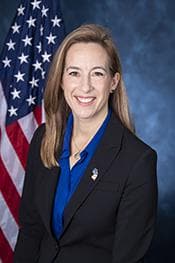
- Mikie Sherrill
- Cosponsors
- None
- Introduced
- In Committee
What this bill would do
The Improving Federal Assistance to Families Act aims to change how the poverty line is measured and used. It directs the Bureau of the Census to create a "Regionally Adjusted Poverty Line" for each State based on regional price parity. The Secretary of Health and Human Services will then use whichever poverty index shows a higher poverty rate for a specific State to determine financial eligibility for certain Federal programs. The bill also mandates a GAO study regarding the ALICE poverty measure. This legislative change seeks to better account for a family's basic needs and regional costs of living.
Yes· 3 of 7
Would households on low incomes be better off under this?+6
The bill adjusts poverty thresholds to reflect higher regional costs of living, which can expand eligibility for federal assistance.
Does this strengthen the Affordable Care Act?+5
The bill provides flexibility to use the new index to ensure low-income households maintain access to Premium Tax Credits under the Affordable Care Act.
Does this make health care easier to get in general?+5
The bill aims to improve access to federal programs by using a poverty line that better reflects regional costs of living.
The opposite
No question was scored the opposite.
Who it would affect, and how
Potential Positive Impacts for People
-
More accurate financial eligibility: By using a "Regionally Adjusted Poverty Line" that accounts for a State's specific price parity, the bill seeks to more accurately reflect the basic needs of families and regional costs of living (Section 2).
-
Increased access to federal programs: The Secretary of Health and Human Services will use the poverty line index that results in a higher poverty rate for a State to determine financial eligibility for certain Federal programs (Section 3, paragraph 1 and 3A).
-
Protection of healthcare access: For the purpose of determining Premium Tax Credits under the Affordable Care Act, there is flexibility to use the new index to ensure low-income households in States not expanding Medicaid do not lose access to these credits (Section 3, paragraph 3B).
-
Future improvements to poverty measurement: The Act requires a GAO study to examine the advantages of the ALICE threshold and how it could be used to better meet the material needs of households and improve access to Federal programs (Section 4).
Potential Negative Impacts for People
- Delayed implementation: The changes to the new poverty line index do not take effect until one year after enactment, and the actual use of the index for administrative and eligibility purposes does not take effect until three years after enactment (Section 6).
Groups and Interests Ranking
Every group the model scored this bill for, from -10 to +10. Hover a score for the reason it gave.
- Demographic And Interest Groups
- Good For Low Income Households+6Good For Urban Residents+3Good For Middle Class Households+2
- Healthcare
- Improves Healthcare Access+5Increases Affordable Care Act Support+5
- Social Issues And Justice
- Improves Poverty Reduction+5
- Governance And Ideology
- Improves Government Transparency+2
- 1/23/2025
- Referred to the Committee on Oversight and Government Reform, and in addition to the Committee on Ways and Means, for a period to be subsequently determined by the Speaker, in each case for consideration of such provisions as fall within the jurisdiction of the committee concerned.
- Introduced in House