Bill · H.R. 6993· House(119-HR-6993)
BEACON Act of 2026
- Introduced
- 1/9/2026
- Last activity
- 10/1/2026 — Placed on the Union Calendar, Calendar No. 735.
- Sponsored by
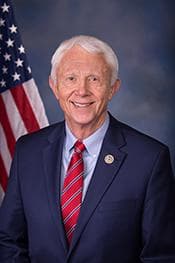
- Jack Bergman
- Cosponsors
- - 7 - 6
- Introduced
- On Calendar
What this bill would do
This bill directs the Secretary of Veterans Affairs to run grant programs for researching and treating chronic mild traumatic brain injury in veterans. It sets up the TBI Innovation Grant Program to award grants to eligible entities for developing and evaluating neurorehabilitation treatments. It also establishes a research grant program for independent third-party research studies and treatments. Additionally, the bill adjusts certain housing loan fees by changing specific dates in the loan fee table. Finally, it requires regular reports to Congress on the progress and findings of these grant programs.
Yes· 3 of 8
Would veterans be better off under this, taking everything together?+9
The bill provides direct targeted research and treatment opportunities for veterans with TBI.
Does this help veterans get medical care?+8
The bill establishes significant grant programs specifically for neurorehabilitation and TBI treatment for veterans.
Does this increase the pay, pensions or support veterans receive?+8
The bill expands therapeutic research opportunities as a specific benefit for veterans suffering from TBI.
The opposite
No question was scored the opposite.
How the text last changed
Reported in House (10/1/2026), compared with Introduced in House. Each change is on the Text tab.
The newer version of the bill changes how the Department of Veterans Affairs administers grant programs for treating chronic mild traumatic brain injury in veterans, modifies funding amounts and eligible organizations, and extends a housing loan fee date. It specifies that the TBI Innovation Grant Program is a three-year program and alters authorization of appropriations from from $30,000,000 to $10,000,000 for each of fiscal years 2026 through 2028. It also adds new reporting requirements, oversight tools, and detailed application contents for grant recipients, while adjusting definitions and adding a new section that changes a date in a loan fee table from June 9, 2034'' to July 14, 2034''.
Who it would affect, and how
Potential Positive Impacts for People
-
Section 2(c)(1) supports designing and testing novel or integrative treatments for mild traumatic brain injury that prioritize patient-centered care, including non-pharmacological therapies. This is positive because it gives veterans access to new and diverse treatment options.
-
Section 2(c)(2)(B) aims to reduce suicidality and common risk factors for completing suicide, including depression and substance use disorders among veterans. This is positive because it directly targets mental health crises and works to protect the lives of our veterans.
-
Section 3(e)(1)(B)(iii) provides for randomized, controlled clinical trials to validate and deliver treatments, establish a standard of care, and improve access to such treatments for veterans. This is positive because it ensures that treatments are thoroughly tested and that veterans can actually get the care they need.
Potential Negative Impacts for People
-
Section 2(e)(6) and Section 3(d)(3) grant the Secretary the authority to suspend, modify, or terminate a grant if an entity fails to comply with reporting requirements or terms and conditions. This could be seen as a negative burden if a paperwork error or compliance hiccup disrupts ongoing research and patient care programs for veterans.
-
Section 5 modifies certain housing loan fees by extending dates in the loan fee table from June 9, 2034, to July 14, 2034. While explicit details on the fee amounts are not in the text, extending these dates means fees associated with veterans' housing loans remain active for a longer period, which could be viewed as a financial burden for individuals utilizing these loans.
Groups and Interests Ranking
Every group the model scored this bill for, from -10 to +10. Hover a score for the reason it gave.
- Healthcare
- Improves Veterans Healthcare+8Improves Mental Health Access+7Increases Research Funding+6Improves Healthcare Access+4
- Demographic And Interest Groups
- Good For Veterans+9Good For People With Disabilities+5
- National Security And Foreign Policy
- Improves Veterans Benefits+8
- Education And Technology
- Increases Scientific Research Funding+7
A committee approved it and sent it to the floor
What changed from Introduced in House
The newer version of the bill changes how the Department of Veterans Affairs administers grant programs for treating chronic mild traumatic brain injury in veterans, modifies funding amounts and eligible organizations, and extends a housing loan fee date. It specifies that the TBI Innovation Grant Program is a three-year program and alters authorization of appropriations from from $30,000,000 to $10,000,000 for each of fiscal years 2026 through 2028. It also adds new reporting requirements, oversight tools, and detailed application contents for grant recipients, while adjusting definitions and adding a new section that changes a date in a loan fee table from
June 9, 2034'' toJuly 14, 2034''.Each change
- Section 2 changes the grant program from a general program to a three-year program named the ``TBI Innovation Grant Program'', and specifies that it must supplement and not supplant other Department clinical care and research relating to mild traumatic brain injury.
- Section 2 updates the list of eligible entities to include specific nonprofit organizations, academic institutions, non-Department health care providers with clinical trial capabilities, and partnerships or consortiums of these entities, while removing previous general provisions.
- Section 2 adds a requirement to measure durability of outcomes at approximately six months following treatment completion, adds clinician training and outreach requirements including Department resource information, and adds coordination with Veterans Health Administration facilities for referrals and continuity of care.
- Section 2 changes the limitation on grant amounts so that the Secretary may not award an eligible entity an amount that exceeds $5,000,000 for any fiscal year, replacing the previous wording of per fiscal year.
- Section 2 adds detailed application requirements regarding proposed activities, expected outcomes, coordination plans, entity budgets with administrative or overhead costs, and assurances of compliance with Federal laws regarding human subjects and patient safety.
- Section 2 updates periodic reporting requirements for grant recipients to include annual reports during the grant period and a report not later than 180 days after the end of the grant period, including detailed expenditures, adverse events, and coordination actions.
- Section 2 adds oversight and enforcement authority allowing the Secretary to suspend, modify, or terminate grants for noncompliance with reporting requirements or other terms and conditions.
- Section 2 changes the authorization of appropriations for Section 2 from $30,000,000 to $10,000,000 for each of fiscal years 2026 through 2028, and removes the provision that funds remain available until expended.
- Section 3 updates eligible entities and application requirements for the independent research grant program, including detailed requirements for budgets, administrative costs, and compliance assurances.
- Section 3 adds specific grant categories and limits for exploratory or pilot research projects to not more than $625,000 each, and collaborative or multidisciplinary initiatives to not more than $1,500,000 each.
- Section 3 updates the requirement for an independent organization agreement, specifying that the Secretary shall seek an independent organization with expertise in randomized controlled trials and research integrity to administer the program, analyze data, and report findings to Congress and the Secretary.
- Section 3 changes the authorization of appropriations for Section 3 to $10,000,000 for each of fiscal years 2026 through 2028 and adds a termination date of three years after enactment.
- Section 4 modifies requirements for reports to Congress regarding the grant programs under sections 2 and 3, specifying timelines and required contents including findings, recommendations, and survey results.
- Section 5 is added to modify the loan fee table in section 3729(b)(2) of title 38, United States Code, by striking
June 9, 2034'' and insertingJuly 14, 2034''. - Section 6 (formerly Section 4) updates definitions, removing the definitions for
TBI'' andtreatment'', adding a specific definition for chronic mild traumatic brain injury andmTBI'', and adding a detailed definition fornonprofit organization''.
Written by an AI model from a comparison of this version’s text with the one before it, not by a person. .
- 10/1/2026
- Reported (Amended) by the Committee on Veterans' Affairs. H. Rept. 119-838.
- Placed on the Union Calendar, Calendar No. 735.
- 5/14/2026
- Committee Consideration and Mark-up Session Held
- Ordered to be Reported (Amended) by the Yeas and Nays: 13 - 10.
- 4/30/2026
- 1 Cosponsor added.
- 4/16/2026
- Subcommittee Consideration and Mark-up Session Held
- Forwarded by Subcommittee to Full Committee (Amended) by the Yeas and Nays: 7 - 5.
- 1 Cosponsor added.
- 4/6/2026
- 2 Cosponsors added.
- 3/30/2026
- 1 Cosponsor added.
- 3/24/2026
- 1 Cosponsor added.
- 3/16/2026
- 1 Cosponsor added.
- 1/22/2026
- Referred to the Subcommittee on Health.
- 1/12/2026
- 1 Cosponsor added.
- 1/9/2026
- Referred to the House Committee on Veterans' Affairs.
- 5 Cosponsors added.
- Introduced in House
 Jeff Crank
Republican · Colorado
 Donald Davis
Democrat · North Carolina
 Sarah Elfreth
Democrat · Maryland
 Kimberlyn King-Hinds
Republican · Northern Mariana Islands
 Nick LaLota
Republican · New York
 Morgan Luttrell
Republican · Texas
 Johnny Olszewski
Democrat · Maryland
 August Pfluger
Republican · Texas
 Terri Sewell
Democrat · Alabama
 Eric Sorensen
Democrat · Illinois
 Suhas Subramanyam
Democrat · Virginia
 Jefferson Van Drew
Republican · New Jersey
 Derrick Van Orden
Republican · Wisconsin