Bill · H.R. 6968· House(119-HR-6968)
Immersive Technology for the American Workforce Act of 2025
- Introduced
- 1/7/2026
- Last activity
- 1/7/2026 — Referred to the House Committee on Education and Workforce.
- Sponsored by
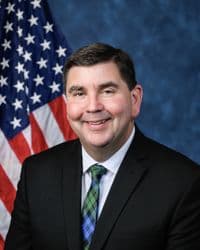
- John Mannion
- Cosponsors
- - 2 - 1
- Introduced
- In Committee
What this bill would do
The Immersive Technology for the American Workforce Act of 2025 directs the Secretary of Labor to create a competitive grant program. This program is designed to support community colleges and area career and technical education centers. The goal is to develop education and training services that utilize immersive technology for workforce development. These programs aim to create career pathways that lead to economic self-sufficiency. Grants will be awarded for periods of up to five years. The act authorizes $50,000,000 for each fiscal year from 2026 through 2035.
Yes· 3 of 9
Would veterans be better off under this, taking everything together?+5
The bill explicitly includes members of the Armed Forces and veterans in its training service provisions.
Is this likely to create jobs?+5
The bill funds training programs designed to facilitate entry into in-demand industry sectors and occupations.
Does this expand the rights of people with disabilities?+5
The bill requires that programs be accessible to individuals with barriers to employment in accordance with the Americans with Disabilities Act.
The opposite
No question was scored the opposite.
Who it would affect, and how
Potential Positive Impacts for People
-
Economic Self-Sufficiency: The bill aims to create career pathways through immersive technology that provide necessary skills for employment leading to economic self-sufficiency (Section 2(b)).
-
Support for Veterans and Military Members: Programs are designed to increase training services for students, including individuals who are members of the Armed Forces or are veterans, to help them enter in-demand industry sectors (Section 2(b)(1)).
-
Accessibility for Individuals with Barriers: The bill requires that programs be accessible to individuals with barriers to employment, adhering to the Americans With Disabilities Act of 1990 (Section 2(b)(2)).
-
Instructor Training: The program can include the training of instructors to use immersive technology for education and training services (Section 2(b)(3)).
-
Targeted Support for Rural Communities: Priority in awarding grants may be given to programs that serve a rural community (Section 2(e)(3)(F)).
Potential Negative Impacts for People
- Grant Limitations: An eligible entity that has been awarded a grant under this section is prohibited from receiving a subsequent grant for the same purpose (Section 2(c)).
Groups and Interests Ranking
Every group the model scored this bill for, from -10 to +10. Hover a score for the reason it gave.
- Demographic And Interest Groups
- Good For Veterans+5Good For Low Income Households+4Good For Rural Residents+4Good For Native Americans+3
- Economy And Finance
- Increases Job Creation+5Improves Economic Growth+3
- Education And Technology
- Increases Public School Funding+4Increases Scientific Research Funding+2
- Social Issues And Justice
- Improves Disability Rights+5
- 8/27/2026
- 1 Cosponsor added.
- 1/27/2026
- 1 Cosponsor added.
- 1/7/2026
- Referred to the House Committee on Education and Workforce.
- 1 Cosponsor added.
- Introduced in House
One bill Congress.gov lists as related to this one — companions in the other chamber, earlier versions, and bills this one absorbed or was folded into.
 Steve Cohen
Democrat · Tennessee
 Gabe Evans
Republican · Colorado
 Pablo Hernández
Democrat · Puerto Rico