Bill · H.R. 6937· House(119-HR-6937)
End H-1B Now Act
- Introduced
- 1/2/2026
- Last activity
- 1/2/2026 — Referred to the Committee on the Judiciary, and in addition to the Committees on Energy and Commerce, and Ways and Means, for a period to be subsequently determined by the Speaker, in each case for consideration of such provisions as fall within the jurisdiction of the committee concerned.
- Sponsored by
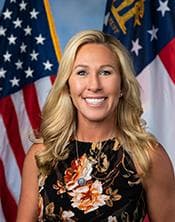
- Marjorie Greene
- Cosponsors
- None
- Introduced
- In Committee
What this bill would do
The "End H-1B Now Act" seeks to amend the Immigration and Nationality Act to eliminate the H-1B program. The bill establishes a schedule to phase out these visas over several years, eventually reaching zero. It also removes fashion models from the eligibility criteria for these visas. Additionally, the bill restricts the specialty occupations eligible for these visas to physicians, surgeons, or nurses. Finally, it places limitations on Medicare-funded residency programs regarding the training of individuals defined as aliens.
Yes
Would union members be better off under this?+3
Reducing foreign competition for skilled labor may increase opportunities for domestic workers.
Does this tighten control of the border?+2
Reducing the number of work visas is intended to tighten immigration controls.
The opposite· 3 of 7
Would immigrants be better off under this?-8
The bill significantly reduces legal immigration opportunities by phasing out the H-1B program and adding residence requirements.
Would business owners be better off under this?-5
Business owners in non-medical specialty occupations will lose access to the H-1B talent pool.
Is this likely to create jobs?-5
The elimination of the H-1B program reduces the influx of foreign skilled workers which could impact job availability in specific sectors.
Who it would affect, and how
Potential Positive Impacts for People
-
Elimination of fashion models from H-1B eligibility: This provision removes fashion models from the list of eligible occupations under Section 101(a)(15)(H)(i)(b) as modified by Section 2, subsection (b)(1).
-
Concentration of visa use on specific medical roles: The bill amends Section 214(i)(2) to specify that specialty occupations must be as a physician, a surgeon, or a nurse, as seen in Section 2, subsection (b)(2).
Potential Negative Impacts for People
-
Phasing out of H-1B visas: The bill implements a steady reduction in the number of available visas each fiscal year, starting at 10,000 in fiscal year 2026 and reaching zero in succeeding years, as detailed in Section 2, subsection (a).
-
Changes to dual intent residence requirements: The bill amends Section 101(a)(15)(H)(i)(b) to require that a person has a residence in a foreign country which they have no intention of abandoning, according to Section 2, subsection (b)(1).
-
Impact on medical training programs: Section 3 amends the Social Security Act to state that certain terms will not include programs that train individuals who are defined as aliens.
Groups and Interests Ranking
Every group the model scored this bill for, from -10 to +10. Hover a score for the reason it gave.
- Demographic And Interest Groups
- Good For Union Workers+3Good For Immigrants-8Good For Business Owners-5
- Economy And Finance
- Increases Job Creation-5Improves Small Business Support-3
- Healthcare
- Increases Medicare Funding-4Improves Healthcare Access-3
- Social Issues And Justice
- Improves Border Security+2Improves Pathway To Citizenship-5
- 1/2/2026
- Referred to the Committee on the Judiciary, and in addition to the Committees on Energy and Commerce, and Ways and Means, for a period to be subsequently determined by the Speaker, in each case for consideration of such provisions as fall within the jurisdiction of the committee concerned.
- Introduced in House