Bill · H.R. 6918· House(119-HR-6918)
Climate Pollution Standard and Community Investment Act of 2025
- Introduced
- 12/19/2025
- Last activity
- 12/19/2025 — Referred to the Committee on Energy and Commerce, and in addition to the Committees on Ways and Means, Education and Workforce, and Science, Space, and Technology, for a period to be subsequently determined by the Speaker, in each case for consideration of such provisions as fall within the jurisdiction of the committee concerned.
- Sponsored by
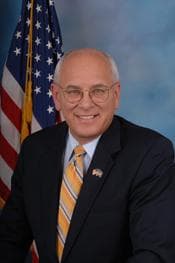
- Paul Tonko
- Cosponsors
- None
- Introduced
- In Committee
What this bill would do
The "Climate Pollution Standard and Community Investment Act of 2025" seeks to amend the Clean Air Act to establish a program aimed at annually phasing down greenhouse gas emissions. It sets a national goal to achieve net-zero greenhouse gas emissions by 2050. The legislation creates a system of emission allowances and enforceable targets for various covered entities, including electricity sources and specific industrial sectors. It also establishes several funds to support clean energy, worker assistance, and community investments. Additionally, the bill includes an international reserve allowance program for certain imported goods and mandates oversight for emission allowance markets through an interagency working group.
Yes· 3 of 26
Does this cut the pollution that drives climate change?+8
The bill establishes a national program to phase down greenhouse gas emissions toward net-zero by 2050.
Does this put more money into wind, solar and other renewable power?+7
The bill creates funds specifically for energy innovation, zero-emission electricity generation, and technical assistance for climate practices.
Would households on low incomes be better off under this?+6
The bill provides specific clean energy rebates and financial assistance for households up to 200 percent of the poverty line.
The opposite
Does this reduce how much oil, gas and coal is produced?-4
The bill targets the phase-out of fossil fuel-sourcing through the transition to net-zero.
Who it would affect, and how
Potential Positive Impacts for People
-
Financial Assistance for Households: The Clean Energy Rebate Program provides rebates to eligible households to assist with energy transitions (Section 102(a)).
-
Support for Vulnerable Populations: The Secretary may establish procedures to ensure beneficiaries of specific benefit programs, such as those administered by the Secretary of Veterans Affairs, receive their eligible rebates (Section 102(b)(2)).
-
Consumer Financial Assistance: States and Indian Tribes will receive emission allowances that can be sold to fund energy efficiency programs, financial incentives for low-emission fuel alternatives, and direct financial assistance such as low-income ratepayer assistance (Section 722(a)(3)(A)).
-
Economic Support for Communities: The Assistance for Adversely Affected Communities program provides payments to local government entities to replace lost revenues caused by employer closures (Section 206(a)).
-
Job Transition Support for Workers: Workers facing job loss or reduced hours due to the energy transition can receive wage adjustment assistance, health insurance premium support, and educational benefits (Sections 208(e) and 208(f)).
-
Labor Protections: Laborers and mechanics working on projects assisted by this title are guaranteed wages at rates not less than those prevailing in their locality (Section 703).
-
Support for Energy-Intensive Industries: Eligible industrial sectors can receive output-based distributions of emission allowances to help them manage the transition (Section 722(b)).
-
Agricultural and Landowner Incentives: Through the Negative Emissions Activities Program, producers can enter into contracts to receive annual payments for performing practices that reduce greenhouse gas emissions or sequester gases on eligible land (Section 743; Section 746).
-
Community Health and Environmental Improvements: The Cleaner Air Community Fund provides resources for environmental and climate justice block grants, enhanced air pollution monitoring, and the development of emissions reduction plans (Section 732).
-
Support for Specific Communities: The program prioritizes assistance for disadvantaged or rural communities through the distribution of funds (Section 724(h)).
-
Investment in Future Technology: The Energy Innovation Fund provides assistance to support the research, development, and demonstration of clean energy technologies (Section 106(c)).
-
Market Stability: The creation of an interagency working group aims to prevent fraud, market manipulation, and unreasonable price fluctuations in the emission allowance market (Section 107(a)(2)).
Potential Negative Impacts for People
-
Financial Penalties for Industry: Covered entities that fail to demonstrate compliance with emission targets are liable for civil penalties, which are calculated based on the auction clearing price of emission allowances (Section 717).
-
Compliance Burdens for Producers: Producers participating in the negative emissions program must follow specific program plans, which include requirements for monitoring, reporting, and third-party verification (Section 746(b)).
-
Requirements for Contract Termination: Under the negative emissions program, if a producer violates a contract, the Administrator may require the refund of all or part of the payments received (Section 746(f)).
-
Restrictions on Assistance: Local government entities receiving payments for community adjustments can receive those payments for no more than 8 fiscal years (Section 206(e)(1)).
-
Limits on Grant Funding: Grants provided through the Community-Based Transition Hub Program are limited to a total of $12,000,000 and cannot exceed a period of 6 years (Section 207(g)).
-
Impact on Unemployment Benefits: Workers receiving wage adjustment assistance are ineligible to receive any other form of unemployment insurance during the period they receive those payments (Section 208(e)(3)(B)).
-
Potential for Reduced Payments: If total payments to local governments exceed available funding, the Secretary may reduce payments on a pro rata basis (Section 206(g)).
Groups and Interests Ranking
Every group the model scored this bill for, from -10 to +10. Hover a score for the reason it gave.
- Demographic And Interest Groups
- Good For Farmers+6Good For Low Income Households+6Good For Union Workers+5Good For Urban Residents+5Good For African Americans+4Good For Asian Americans+4Good For Business Owners+4Good For Hispanic Americans+4Good For Native Americans+4Good For Rural Residents+4Good For Middle Class Households+3Good For Veterans+3
- Environment Energy And Infrastructure
- Reduces Carbon Emissions+8Increases Renewable Energy Investment+7Improves Environmental Protections+6Improves Rural Development+4Reduces Fossil Fuel Production-4
- Economy And Finance
- Increases Unemployment Benefits+5Improves Economic Growth+3Improves Union Protections+3Increases Job Creation+3Improves Small Business Support+2
- Social Issues And Justice
- Improves Poverty Reduction+5Improves Racial Equity+3
- Education And Technology
- Increases Scientific Research Funding+6
- Governance And Ideology
- Improves Government Transparency+4
- Healthcare
- Improves Healthcare Access+3
- 12/19/2025
- Referred to the Committee on Energy and Commerce, and in addition to the Committees on Ways and Means, Education and Workforce, and Science, Space, and Technology, for a period to be subsequently determined by the Speaker, in each case for consideration of such provisions as fall within the jurisdiction of the committee concerned.
- Introduced in House