Bill · H.R. 6865· House(119-HR-6865)
American Dream Protection Act of 2025
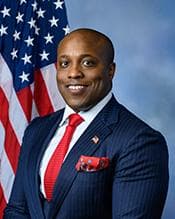
- Introduced
- 12/18/2025
- Last activity
- 12/18/2025 — Referred to the Committee on the Judiciary, and in addition to the Committees on Education and Workforce, and Oversight and Government Reform, for a period to be subsequently determined by the Speaker, in each case for consideration of such provisions as fall within the jurisdiction of the committee concerned.
- Sponsored by
- Wesley Hunt
- Cosponsors
- None
- Introduced
- In Committee
What this bill would do
The American Dream Protection Act of 2025 aims to stop Federal financial assistance from going to States and public colleges that give certain benefits to people not lawfully present in the U.S. This includes prohibiting in-State tuition rates and State-based financial aid for these individuals. If the Secretary of Education finds a State or institution is ineligible, they lose Federal funding for the following fiscal year. The bill also gives the force of law to Section 4 of Executive Order 14287 regarding Federal benefits in sanctuary jurisdictions.
Yes· 3 of 6
Does this give the federal government more power?+6
Gives the Secretary of Education power to withhold federal funds from states and institutions.
Does this tighten control of the border?+3
Strengthens federal immigration policy by restricting benefits to those not lawfully present.
Does this reduce what the federal government spends?+2
The bill restricts the flow of federal financial assistance to non-compliant states and institutions.
The opposite· 3 of 9
Would immigrants be better off under this?-9
Directly removes tuition benefits and financial aid for immigrants not lawfully present.
Does this make college cost less?-8
Eliminates in-state tuition rates and state-based aid for undocumented students.
Does this put more money into public schools?-6
Public institutions risk losing all federal financial assistance for non-compliance.
Who it would affect, and how
Potential Positive Impacts for People
-
Prioritization of Citizens and Lawful Residents: The bill is based on the finding that Federal taxpayer money should prioritize the education of U.S. citizens and lawful residents (Section 2).
-
Addressing Inequities: By stopping in-State tuition for those not lawfully present, the bill seeks to remove inequities for citizens of other States (Section 2).
-
Uniform Policy: The bill aims to maintain a uniform Federal immigration policy (Section 2).
Potential Negative Impacts for People
-
Loss of Federal Funding for Schools: Public institutions of higher education could lose all Federal financial assistance if they charge tuition for people not lawfully present at a rate equal to or less than U.S. citizen residents or provide them State-based financial aid (Section 3).
-
Loss of Federal Funding for States: A State may lose Federal financial assistance if it allows public colleges to charge people not lawfully present tuition rates equal to or less than U.S. citizen residents (Section 3).
-
Restriction of Education Benefits: Aliens who are not lawfully present in the United States would be barred from receiving in-State tuition rates or State-based financial aid at public institutions if the State or school wants to keep Federal funding (Section 3).
Groups and Interests Ranking
Every group the model scored this bill for, from -10 to +10. Hover a score for the reason it gave.
- Demographic And Interest Groups
- Good For Middle Class Households+1Good For White Americans+1Good For Immigrants-9Good For Hispanic Americans-4Good For Students-4Good For Young Adults-4Good For Low Income Households-3
- Education And Technology
- Improves College Affordability-8Increases Public School Funding-6
- Economy And Finance
- Reduces Government Spending+2Improves Fiscal Responsibility+1
- Social Issues And Justice
- Improves Border Security+3Improves Pathway To Citizenship-5
- Governance And Ideology
- Increases Federal Power+6Increase States Rights-6
- 12/18/2025
- Referred to the Committee on the Judiciary, and in addition to the Committees on Education and Workforce, and Oversight and Government Reform, for a period to be subsequently determined by the Speaker, in each case for consideration of such provisions as fall within the jurisdiction of the committee concerned.
- Introduced in House
One bill Congress.gov lists as related to this one — companions in the other chamber, earlier versions, and bills this one absorbed or was folded into.