Bill · H.R. 6816· House(119-HR-6816)
Shadow Docket Sunlight Act of 2025
- Introduced
- 12/17/2025
- Last activity
- 12/17/2025 — Referred to the House Committee on the Judiciary.
- Sponsored by
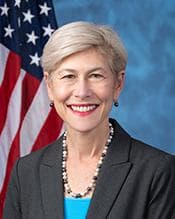
- Deborah Ross
- Cosponsors
- - 5 - 0
- Introduced
- In Committee
What this bill would do
The "Shadow Docket Sunlight Act of 2025" aims to improve the administration of justice regarding Supreme Court decisions. It requires the Supreme Court to provide written explanations for orders involving preliminary injunctive relief or stays of such relief. Additionally, the bill mandates the disclosure of how each participating justice voted on these orders. This requirement applies to cases within the Court's appellate jurisdiction. The Act also establishes a reporting requirement for the Director of the Federal Judicial Center to monitor compliance.
Yes
Does this make what the government does easier for the public to see?+7
The act mandates the publication of written reasoning and individual justice votes to increase the public's visibility into Supreme Court actions.
Does this protect the right to fair treatment by the courts?+5
The requirement for the Court to evaluate specific criteria for injunctions adds a layer of procedural clarity to judicial orders.
The opposite
No question was scored the opposite.
Who it would affect, and how
Potential Positive Impacts for People
-
Increased Transparency in Judicial Decisions: Under Section 2(b)(1), the Supreme Court would be required to publish a written explanation of reasons and indicate how each participating justice voted regarding orders granting, denying, or vacating preliminary injunctive relief or stays. This provides clarity on the reasoning and individual votes of the justices.
-
Standardized Criteria for Relief: Section 2(b)(2) and Section 2(b)(3) require the written explanation to include an evaluation of specific criteria, such as whether an applicant is likely to succeed on the merits, the likelihood of irreparable harm, the balance of equities, and the public interest. This ensures that the Court's decisions on injunctions and stays are supported by an evaluation of these specific factors.
-
Accountability through Oversight: Section 3 requires the Director of the Federal Judicial Center to submit reports to Congress assessing the extent of compliance or noncompliance with these new requirements. This creates a mechanism to track whether the Supreme Court is following the new rules.
Potential Negative Impacts for People
- No negative impacts are explicitly stated in the text of the bill.
Groups and Interests Ranking
Every group the model scored this bill for, from -10 to +10. Hover a score for the reason it gave.
- Governance And Ideology
- Improves Government Transparency+7Improves Due Process+5
- 1/13/2026
- 1 Cosponsor added.
- 12/17/2025
- Referred to the House Committee on the Judiciary.
- 4 Cosponsors added.
- Introduced in House
One bill Congress.gov lists as related to this one — companions in the other chamber, earlier versions, and bills this one absorbed or was folded into.
 J. Correa
Democrat · California
 Henry Johnson
Democrat · Georgia
 Lucy McBath
Democrat · Georgia
 Jamie Raskin
Democrat · Maryland
 Mary Gay Scanlon
Democrat · Pennsylvania